


Turkish Eggs (çılbır) prove that simple ingredients can turn into a meal you’ll remember. This dish brings together silky poached eggs, garlicky herbed yogurt, and a warm, spiced butter drizzle for a bite that’s creamy, tangy, and just a little spicy.
It’s perfect for quick breakfasts, easy brunches, or even a weeknight dinner when you want something comforting but not heavy.
Let’s walk through what makes çılbır special, what ingredients to pick up, how to get those poached eggs just right, and some tasty ways to serve it. I’ll throw in a few simple swaps for different diets and some meal-prep tips if you like planning.
What Are Turkish Eggs with Creamy Yogurt Butter Sauce?
This dish layers soft poached eggs over tangy, herbed yogurt and finishes with a warm, spiced butter drizzle. You get cool yogurt, runny yolks, and aromatic butter in every forkful.
Traditional Origins of Çılbır


Çılbır goes way back to the Ottoman era and still feels classic in Turkish kitchens. It started as a basic farmer’s breakfast: eggs poached and set over plain yogurt.
Over the years, cooks added herbs and a buttery sauce to make things interesting. You’ll spot çılbır in homes and small cafés all over Turkey, each with its own twist—sometimes dill, mint, or labneh instead of Greek yogurt. It always stays humble and satisfying.
Flavor and Texture Profile
This dish is all about contrast. The yogurt is cool and tangy, while the poached eggs bring warmth and those runny yolks.
Break a yolk, and it swirls into the yogurt, making a silky sauce. The butter sauce brings richness and a gentle spice, often from Aleppo pepper or paprika. Fresh herbs brighten things up, and flaky sea salt adds a pop of crunch. Honestly, every bite feels balanced—creamy, warm, and just a hint of heat.
The Role of Herbed Yogurt and Spiced Butter
Herbed yogurt is the base. You’ll mix thick Greek yogurt or labneh with lemon, garlic, and fresh herbs like dill or mint.
This cuts through the richness of the eggs and gives a tangy, fresh layer. The spiced butter comes together fast—just melt butter and stir in Aleppo pepper or paprika, then pour it over everything while it’s still warm. That’s what makes the sauce so fragrant and creamy. The combo is what really sets Turkish eggs apart.
Essential Ingredients for Turkish Eggs
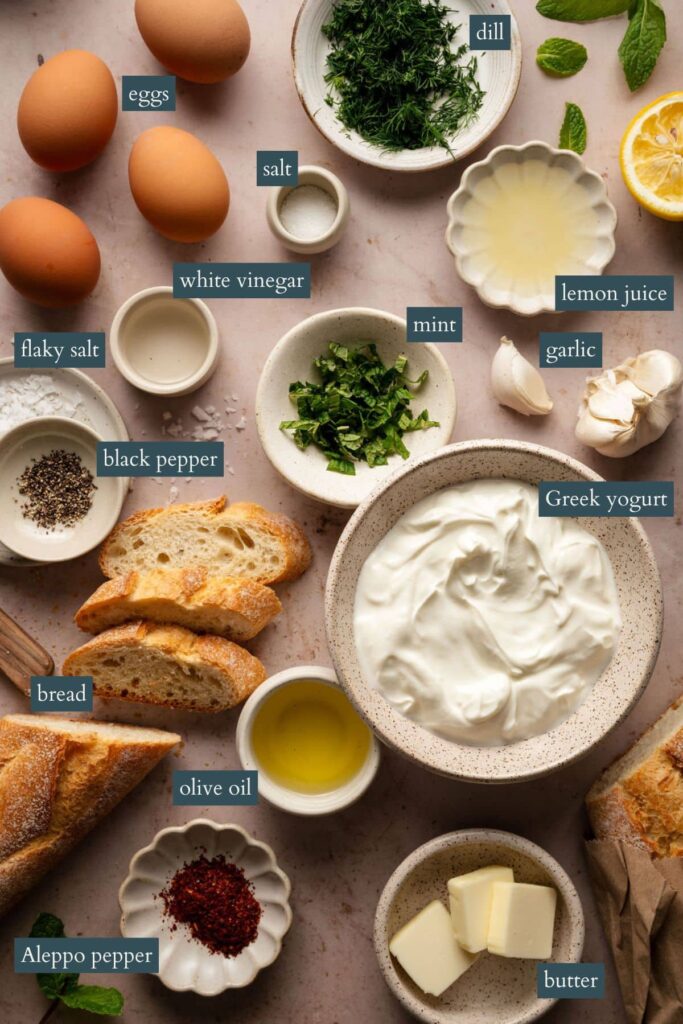
You need thick, tangy yogurt, warm spiced butter, perfectly poached eggs, and bread sturdy enough to scoop up all the good stuff. Each piece matters: yogurt for creaminess, Aleppo pepper butter for heat and aroma, poached eggs for silky yolks, and solid bread for dipping.
Choosing the Best Greek Yogurt


Go for whole milk Greek yogurt if you want the creamiest, most satisfying texture. It holds up under the warm butter and gives that rich, tangy base you want in çılbır.
Make your herbed yogurt by stirring in olive oil, lemon juice, grated garlic, chopped dill or mint, and a little flaky sea salt. Taste as you go—sometimes the lemon or garlic can take over if you’re not careful.
If your yogurt feels thin, strain it over cheesecloth for 30–60 minutes to thicken it up. That helps the eggs sit nicely and keeps the sauce from running everywhere.
The Importance of Aleppo Pepper Butter
Use unsalted butter so you can control the salt at the end. Melt the butter gently and add Aleppo pepper right after taking it off the heat. That way, you get a fruity, gentle heat without bitterness.
Aleppo pepper has a mellow heat and a sort of raisin-like flavor that loves lemony yogurt. If you can’t find it, mix sweet paprika with a pinch of cayenne—it’s not the same, but it works.
Drizzle in a little olive oil and crack some black pepper into the butter before spooning it over the eggs. The warm butter blends with the yogurt and yolk for a sauce that’s honestly hard to beat.
Poached Eggs and Their Secrets


Fresh eggs make a huge difference. The whites cling better, and you’ll get neater poached eggs.
Bring a wide pan of water to a gentle simmer. Add a splash of distilled white vinegar—just a tablespoon per liter is enough to help the whites set without making the eggs taste vinegary.
Crack each egg into a small bowl, swirl the water gently, and slip the egg in. Poach for 3–4 minutes for runny yolks. Lift with a slotted spoon and let them drain on paper towels before plating.
Crusty Bread and Perfect Dipping Options
Pick sturdy bread—think warm pita, crusty sourdough, or Turkish pide. You need something that won’t fall apart when you scoop up yogurt and yolk.
Warm the bread, so it’s soft and ready to soak up the sauce. Brush slices with olive oil and toast them if you want a little crunch.
For gluten-free, try thick polenta rounds or roasted potato slices. A drizzle of olive oil and a squeeze of lemon over the bread adds a fresh kick.
Step-by-Step: How to Make Turkish Eggs with Creamy Yogurt Butter Sauce
You’ll make garlicky herbed yogurt, poach eggs so the yolks stay runny, melt butter with Aleppo pepper, and put it all together. Timing matters for the best textures, but it’s not hard.
Making the Creamy Herbed Yogurt


Start with 1 cup full‑fat Greek yogurt in a bowl. Add 1 clove of grated garlic, 1 tablespoon of lemon juice, 1 tablespoon of extra‑virgin olive oil, 2 tablespoons of chopped dill, 1–2 teaspoons of mint (if you like), and 1/4–1/2 teaspoon of kosher salt. Whisk until it’s smooth and a bit glossy.
Taste it—add more lemon if you want it brighter, or a pinch more salt if it’s bland. If it’s too thick, stir in a teaspoon of water at a time until it spreads easily. Keep it chilled until you’re ready to serve.
Poaching Silky Eggs with Runny Yolks


Use very fresh large eggs for the best results. Fill a wide saucepan with about 3 inches of water and bring it to a gentle simmer. Add a teaspoon of white vinegar.
Stir the water to make a gentle whirlpool, crack an egg into a small cup, and slip it into the center. Poach for 2–3 minutes if you want a runny yolk. Lift it out with a slotted spoon, drain on a paper towel, and repeat with the rest. You can keep the eggs warm in very hot (not boiling) water until you’re ready to plate.
Preparing the Spiced Butter Drizzle


Melt 2 tablespoons unsalted butter in a small skillet over low heat. When it’s melted and foaming, add 1 teaspoon Aleppo pepper (or mild chili flakes) and stir for about 30–45 seconds.
Keep an eye on it—don’t let the butter brown. For a little extra depth, add a pinch of smoked paprika or a squeeze of lemon. Pour the butter into a heatproof bowl to stop it from cooking further. That warm, orange drizzle will pop against the cool yogurt.
Assembling and Plating
Spread a thick layer of herbed yogurt on shallow bowls or a big plate. Gently set 2 poached eggs on the yogurt with the yolks showing.
Spoon the warm Aleppo pepper butter over the eggs and a little onto the yogurt. Sprinkle with chopped dill, flaky sea salt, and a crack of black pepper. Serve right away with crusty bread or toasted pita for scooping. You want each bite to bring cool yogurt, silky egg, and a hit of spiced butter.
Serving Suggestions and Presentation
Keep the yogurt smooth and, if you can, use slightly warmed bowls so the yogurt and butter stay at their best. Add herbs and a little crunch for contrast.
Toppings and Finishing Touches


Top each plate with flaky sea salt and a little extra spiced butter. Scatter torn dill and chopped mint for brightness. Crumbled feta or goat cheese brings a salty, creamy note—just a tablespoon or two per serving is plenty.
If you like heat, add a pinch of red pepper flakes or a bit of harissa on the side. For extra richness, fold some labneh into the yogurt or add a spoonful on the side. Finish with black pepper and a sprinkle of herbs.
Bread Pairings and Side Ideas
Serve with warm pita wedges or crusty sourdough for dipping. Toasted pita or grilled pide holds up better than thin flatbread.
If you’re making this for brunch, sautéed spinach or mushrooms on the side add texture and make it more filling. Offer a bowl of labneh or crumbled feta for guests to add. Mint tea or strong Turkish tea goes great with the fresh herbs in the dish.
Customization: Variations and Dietary Tips
You can tweak the heat, swap out dairy, or make this dish plant-based and still keep it creamy and bright. Change things up to fit what you have or what you’re craving.
Mild, Medium, or Spicy: Adjusting the Heat
Change the pepper and the amount to control spice. For mild, stick to sweet paprika or smoked paprika and skip the red pepper flakes.
For medium, use ½–1 teaspoon Aleppo pepper or regular paprika with a pinch of cayenne. That gives color and a gentle kick without overwhelming the yogurt.
For spicy, add ¼–½ teaspoon cayenne or harissa to the butter, or finish with chili oil. Taste as you go so the spice doesn’t drown out the eggs and yogurt. You can always serve extra chili on the side if people want more heat.
Easy Gluten-Free and Dairy-Free Options
This recipe is naturally gluten-free if you skip regular bread. Serve with gluten-free toast, corn flatbread, or roasted potatoes to soak up the sauce.
For dairy-free, swap Greek yogurt for a thick plant-based yogurt—unsweetened coconut, almond, or soy yogurt that’s “strained” or “Greek-style” works best. Use plant-based butter or a neutral oil for the spiced drizzle.
Check labels for hidden gluten or added sugar. If you’re sharing the recipe, add notes about swaps and baking times for gluten-free breads so others can get the same results.
Vegan and Vegetarian Adaptations and Creative Twists
For a vegetarian version, just keep the eggs and use the dairy-free options above. If you want it vegan, swap poached eggs for roasted chickpeas, tofu scramble, or even silken tofu rounds, gently warmed in the butter sauce.
Roasted vegetables like cherry tomatoes or eggplant cubes add a nice texture. Toss on some toasted pine nuts or walnuts for crunch.
Fresh dill, mint, or parsley brightens things up. They really make a difference.
Meal Prep and Storage Tips
You can make the herbed yogurt up to three days ahead. Poach the eggs and hold them briefly in ice water. The butter sauce is best fresh, but you can reheat it gently if you must.
Making Herbed Yogurt Ahead
Mix up the yogurt base one to three days before serving for the best flavor. Use full-fat Greek yogurt, lemon, grated garlic, chopped dill and mint, olive oil, and salt. Store it in an airtight container in the fridge.
Take the yogurt out 15–20 minutes before serving so it warms up. Cold yogurt just doesn’t have the same contrast with warm eggs.
If it thickens in the fridge, stir in a teaspoon or two of water or olive oil to loosen it. Label the container with the date and use it within 72 hours.
Need more tang? Add a splash of lemon right before serving.
Reheating Poached Eggs and Butter Sauce
If you poach eggs ahead, cool them in an ice water bath for five minutes. Store them in the same water in the fridge for up to 24 hours.
To reheat, lower eggs into simmering (not boiling) water for up to a minute. Use a slotted spoon and warm them until just heated through — the yolk should stay soft.
Make the spiced butter sauce fresh if you can. If you need to reheat, do it gently over low heat and whisk to recombine. Don’t boil; high heat ruins the texture.
Tips for Leftovers and Batch Cooking
Batch-cook the components: yogurt, melted butter with spices (cooled and stored), and poached eggs kept separate. Store each in airtight containers — yogurt lasts three days, eggs for 24 hours, and butter sauce is best used the same day.
When serving later, warm bowls in a low oven to keep the yogurt and egg temperature just right. Toast bread right before plating so it stays crisp.
If you have to freeze something, only freeze plain yogurt. Thawed yogurt turns grainy, though, and freezing poached eggs or butter sauce just doesn’t work — the texture suffers.
Discover More Turkish Breakfast Favorites
There are so many savory and fresh options that go well with yogurt and eggs. You’ll find simple breads, bright salads, and warm spreads that round out a full Turkish breakfast.
Classic Breakfast Dishes from Turkey
In Turkey, you’ll often see a breakfast spread called kahvaltı. It’s all about mixing and matching: fresh bread, cheeses, olives, tomatoes, cucumbers, and sometimes cured meats like sucuk.
Each item sits on the table so everyone can build their own bites with yogurt, egg yolks, or buttered bread. Small plates like white cheese (beyaz peynir), kasar or feta-like cheeses, and honey with clotted cream (kaymak) add sweet contrast.
Black and green olives bring salt and a bit of texture. Serving warm pide or simit (those sesame bread rings) makes dipping into sauces and yogurt pretty irresistible.
Expanding Beyond Çılbır for Brunch
Try other egg dishes and hot items that still feel light. Menemen is scrambled eggs with tomatoes, peppers, and onions. It’s saucy and goes really well with crusty bread.
Fried or baked eggs with sucuk bring spicy, garlicky notes. That contrast with the cool yogurt in çılbır is just fantastic.
Add spreads like muhammara, a red pepper and walnut blend, or ezme, a spicy tomato salad, to bring heat and color. Put out small bowls of herbs and raw vegetables so everyone can build their own plate if they want.
These options keep your brunch interesting and let Turkish flavors shine through. Plus, you don’t need to fuss with complicated steps.
FAQ
What ingredients do I need to make Turkish eggs?
You’ll need thick, tangy Greek yogurt, eggs for poaching, butter, Aleppo pepper (or paprika), garlic, fresh herbs like dill or mint, lemon, and sturdy bread like pita or sourdough for serving.
How do I get the poached eggs just right for Turkish eggs?
Use very fresh eggs for best results, bring a wide pan of water to a gentle simmer with a splash of vinegar, and crack each egg into a small bowl before gently slipping it into the water. Poach for 3–4 minutes for runny yolks, then lift with a slotted spoon and drain on paper towels.
How can I customize Turkish eggs for different dietary preferences?
For a dairy-free version, substitute Greek yogurt with plant-based yogurt and use plant-based butter or oils. To make it vegan, replace poached eggs with roasted chickpeas or tofu scramble. Adjust spice levels to control heat and choose gluten-free bread options if needed.
What are some tips for preparing and storing Turkish eggs and their components?
Herbed yogurt can be made 1-3 days ahead and stored in the fridge. Poached eggs can be cooled and refrigerated for up to 24 hours; reheat by brief immersion in hot water. The spiced butter is best made fresh, but can be gently reheated. Batch-cooked components should be stored separately in airtight containers for optimal freshness.
What are Turkish eggs, and what makes them special?
Turkish eggs, or çılbır, are a simple yet flavorful dish featuring silky poached eggs served over tangy herbed yogurt, finished with a warm, spiced butter drizzle. The contrast of cool yogurt, runny yolks, and aromatic butter creates a memorable and balanced flavor.


