
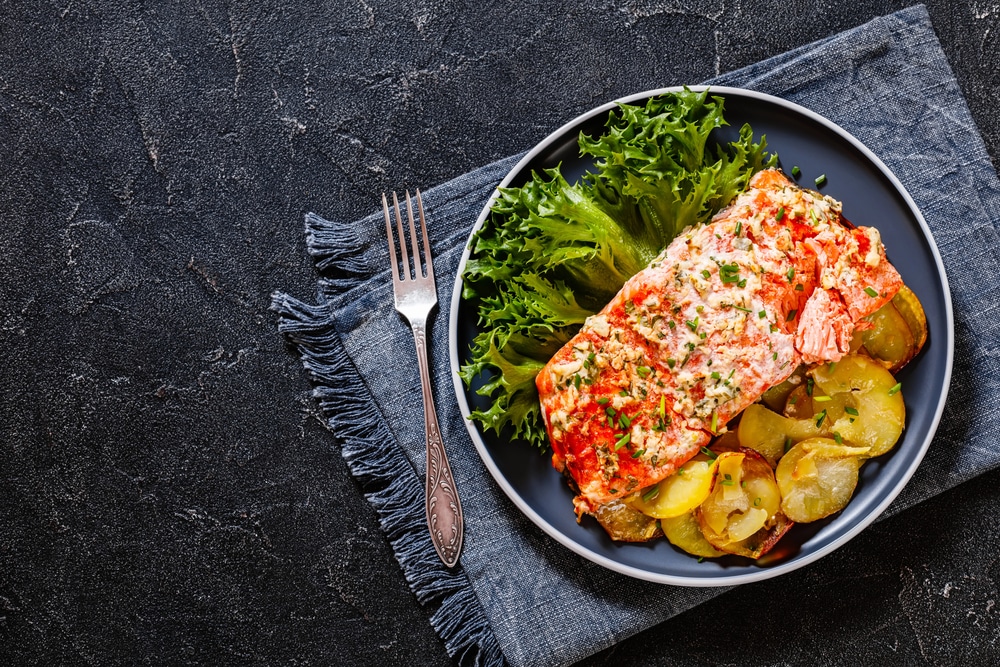
Craving a simple, cozy meal that feels special but won’t take all night? A salmon and potato bake gives you flaky salmon, tender potatoes, and a creamy, golden top in one easy dish you can make any weeknight.
It works for a family dinner, a quiet night in, or a meal to impress without fuss. This dish combines inexpensive pantry staples with fresh salmon to create a hearty, flavorful bake you can tweak with herbs, cheese, or a squeeze of lemon.
You’ll find clear ingredient tips, step-by-step instructions, tasty variations, and storage ideas ahead. That way, you can cook it confidently and enjoy leftovers without stress.
What Is Salmon and Potato Bake?
This dish layers or mixes cooked potatoes with salmon and a creamy sauce, then bakes until the top is golden and the center is set. You get a warm, one-dish meal that combines flaky fish, tender potatoes, and a rich sauce for easy family dinners.
Origins and Popularity
Salmon and potato bake grew from simple home cooking, where people stretched a piece of fish into a filling meal. Families in Northern Europe and coastal regions often paired salmon with staples like potatoes and cream because those ingredients stayed available year-round.
You’ll find versions that use fresh fillets, canned salmon, or leftover cooked fish. The recipe gained wider popularity because it’s budget-friendly, feeds several people, and stores well as leftovers.
Home cooks and food writers adapted it into casseroles and gratins. Now it pops up in weeknight menus and comfort-food collections.
Key Features of the Dish
The dish centers on three main parts: salmon, potatoes, and a binding sauce. Potatoes are thinly sliced or cubed so they cook through.
Salmon pieces sit on or among the potatoes to keep them moist and add protein. Sauces range from simple milk-and-cream mixtures thickened with flour to herb-yogurt or mustard-based sauces.
Cheese or breadcrumbs on top add a golden crust. You can swap ingredients easily—use spinach or leeks for greens, half-and-half for a lighter sauce, or gluten-free flour to keep it safe for special diets.
Salmon and Potato Bake vs. Potato Bake
A potato bake focuses on potatoes as the main ingredient and may include cheese, cream, and onions without fish. It aims for rich, layered potatoes—think scalloped potatoes or gratin.
Add salmon, and the dish shifts to being a complete main course with more protein and omega-3s. The texture changes too: salmon flakes soften the dish and introduce a distinct flavor.
If you want a vegetarian option, stick to a potato bake. If you want a heartier meal that serves as the main, choose the salmon and potato bake.
Ingredient Guide for the Best Salmon and Potato Bake
Focus on fresh, firm salmon, waxy potatoes that hold their shape, and a few bold flavor boosters. Pick dairy and cream that give a silky sauce and choose add-ins that match the bake’s texture and seasonings.
How to Choose Salmon Fillets
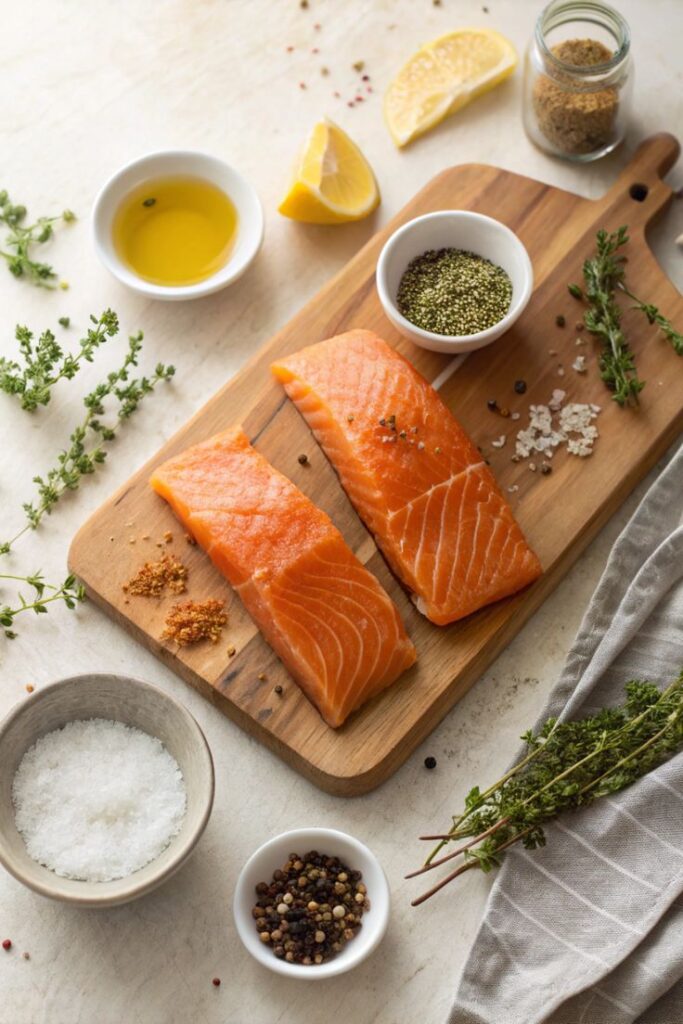
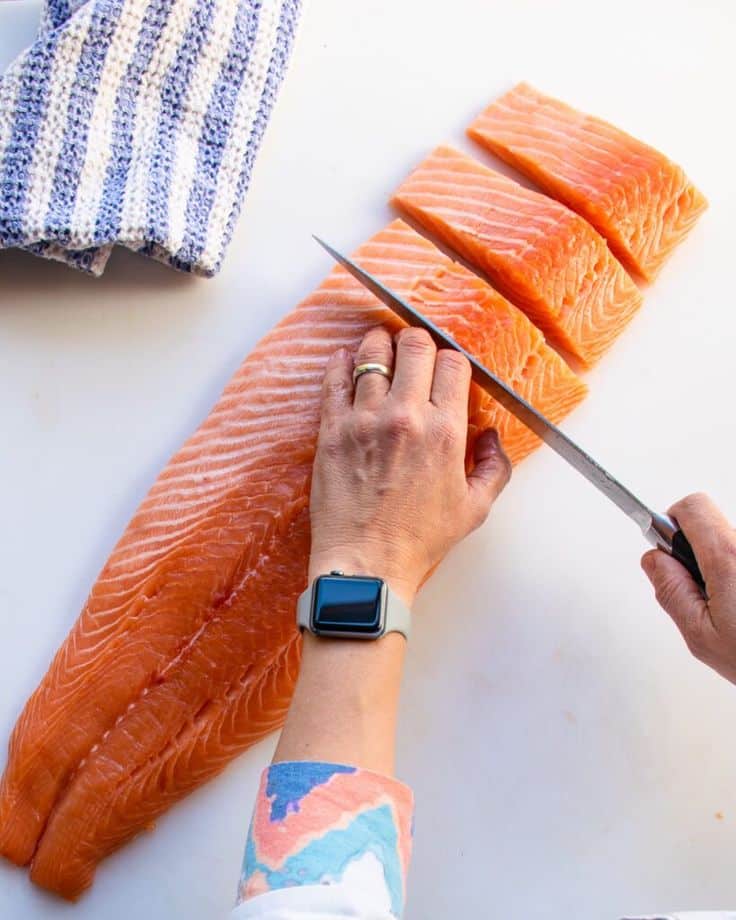
Choose salmon with bright color and firm flesh. Fillets should smell clean, not fishy.
Look for cuts about 1–1.5 inches thick so they bake evenly with the potatoes. Wild-caught or farmed, both work; wild tends to be leaner and firmer, while farmed gives richer fat and a more tender result.
Skinless fillets cut into 1–2 inch chunks fit well into a layered bake and cook in the same time as potatoes. If you buy frozen, thaw in the fridge overnight and pat dry.
Season simply with salt, pepper, and a squeeze of lemon before placing into the sauce. That keeps the salmon moist and flaky.
Choosing and Prepping Potatoes
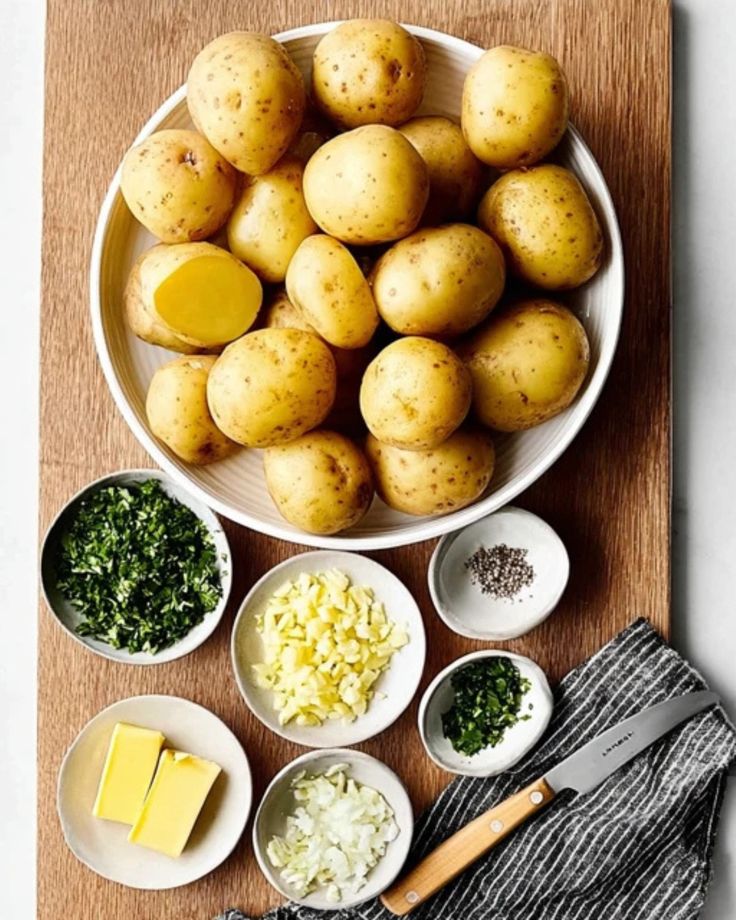
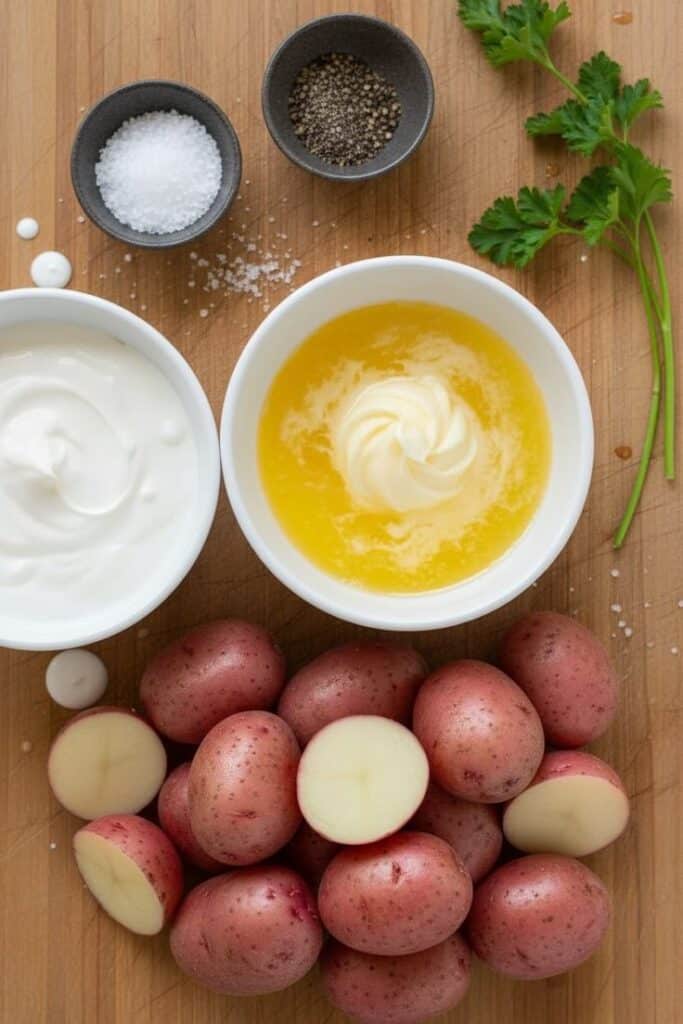
Pick waxy potatoes like Yukon Gold, red potatoes, or Jersey Royals for a potato bake. They hold their shape after boiling and give a creamier texture than starchy types.
Parboil whole or halved potatoes for 10–15 minutes until just tender. Let them cool before slicing into 0.5–1 cm discs.
This ensures the roasted potatoes on top brown well without the base becoming mushy. For a crisper top, brush the slices with melted butter or oil mixed with chopped rosemary or thyme.
Salt the slices lightly before baking to draw out moisture and boost flavor.
Essential Add-Ins and Flavor Boosters
Use ingredients that add brightness or a savory punch. Capers, lemon zest, and chopped fresh herbs like dill or parsley pair very well with salmon fillets and cut through the creaminess.
A small amount of mustard (Dijon) or a splash of white wine in the sauce adds depth. Sliced shallots or thinly sliced leeks give sweetness; peas or baby spinach add color and lightness to the creamy salmon and potato bake.
Keep quantities modest: capers or lemon zest in the range of 1–2 tablespoons, herbs, a few tablespoons chopped. Overloading can hide the salmon’s flavor and make the bake heavy.
Dairy, Cream, and Cheese Options
Choose a base that creates a smooth sauce without breaking. Combine butter and a flour roux with semi-skimmed or whole milk for a stable bechamel-style sauce.
Add crème fraîche or Greek yogurt (2–4 tablespoons) for tang and creaminess. For richer bakes, use single cream or a mix of cream and milk.
Avoid very low-fat dairy that can split under heat. If you want cheese, sprinkle 50–100 g of a melting cheese (Gruyère, cheddar, or mozzarella) on top for a golden crust.
Season the sauce with a pinch of nutmeg, salt, and pepper. Stir in the dairy off the heat if using yogurt to prevent curdling and keep the sauce velvety for the roasted potatoes and salmon.
Step-by-Step Cooking Instructions
You will prep thin, even potato slices, make a seasoned creamy or savory sauce, and layer salmon pieces so everything cooks evenly. Follow clear timing and temperature tips to keep potatoes tender and salmon flaky.
Preparing the Potatoes
Peel or scrub 2–3 medium potatoes and slice them 2–3 mm thick. Use a mandoline or sharp knife, so slices cook evenly.
Rinse slices under cold water to remove extra starch, then pat dry with a towel. Parboil if you prefer a softer result: simmer slices 3–5 minutes, drain, and let cool.
Lay slices in a single layer on a tray so they don’t stick together. If you skip parboiling, slice slightly thinner and arrange layers with more sauce so they steam while baking.
Season each layer lightly with salt and pepper. Brush or rub a little butter or oil on slices to help brown.
Even thickness and light seasoning matter most for a perfect salmon and potato bake.
Making the Creamy or Savory Base
Choose heavy cream, half-and-half, or a mix of milk and crème fraîche for a creamy salmon and potato bake. For a lighter option, use milk plus a tablespoon of flour or Dijon mustard to thicken.
Heat 1–2 cups of your liquid with 1 small sautéed onion and 1–2 cloves of garlic until warm. Stir in herbs and seasoning: 1 tsp dill or 2 tsp fresh, 1/2 tsp salt, and 1/4–1/2 tsp black pepper.
Add 1/2 cup grated cheese (Gruyère or cheddar) if you want a golden top. Remove from heat before pouring; the sauce should coat a spoon and be warm, not boiling.
If you prefer a savory non-creamy base, mix olive oil, lemon juice, chopped parsley, and a pinch of paprika. Toss salmon pieces in that mix and drizzle a little over the potato layers so the baked salmon and potatoes stay moist.
Layering Tips for Salmon and Potatoes
Grease a 9×13 or similar baking dish with butter. Start with a thin potato layer to form a stable base.
Add a few spoonfuls of the warm sauce to cover but not drown the potatoes. Break salmon into 2–3 inch pieces and distribute evenly; avoid crowding so each piece cooks through.
Alternate layers: potatoes, salmon, sauce, and thinly sliced onions or spinach if using. Finish with a final potato layer and pour remaining sauce over the top to ensure even cooking.
Sprinkle cheese or breadcrumbs if you want a crust. Cover tightly with foil and bake at 375°F (190°C) for 35–45 minutes.
Uncover and bake 15–20 minutes more until the top is golden and the potatoes are tender when pierced. Let rest 5–10 minutes before serving so the creamy salmon and potato bake sets.
Popular Salmon and Potato Bake Variations
These versions focus on texture, ease, and bold flavors. You’ll find a creamy, herb-forward casserole; a quick sheet-pan roast with crisp potatoes; and a sticky-sweet honey garlic bake that’s great for weeknights.
Creamy Salmon and Potato Bake with Spinach
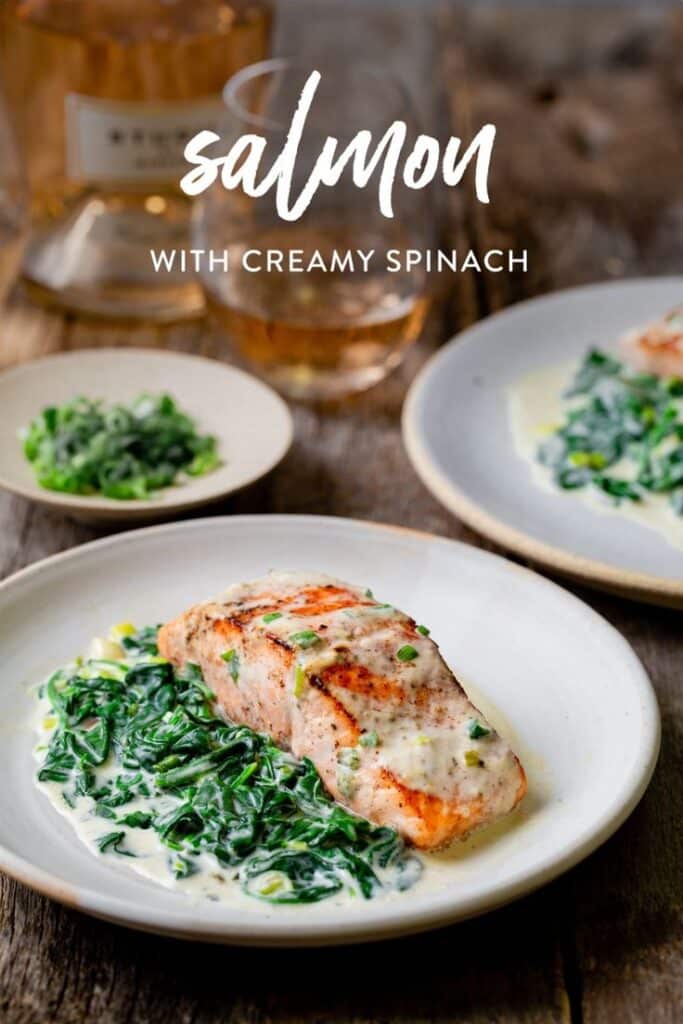
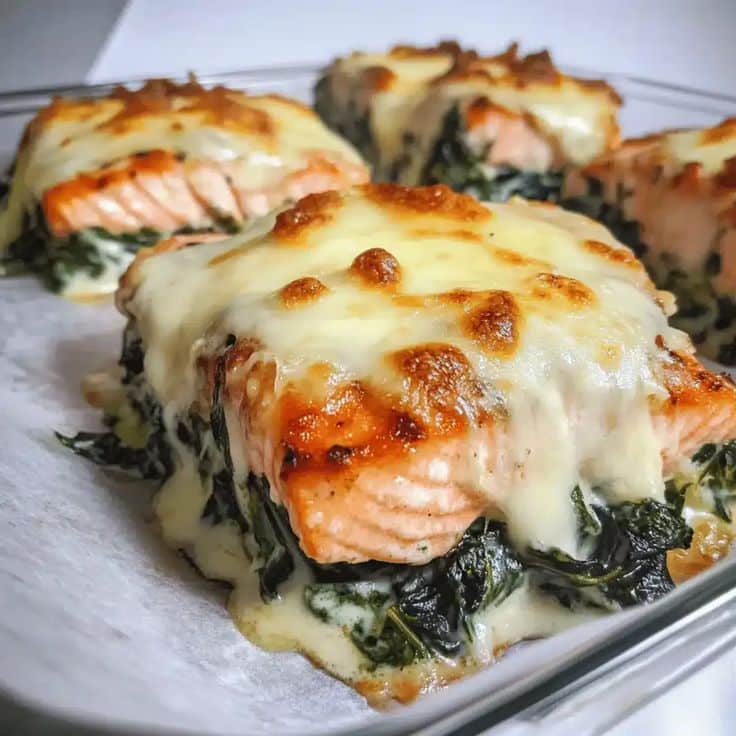
This version layers thinly sliced potatoes, chunks of salmon, and wilted spinach in a rich cream sauce. Use half heavy cream and half milk or a light crème fraîche to keep the sauce smooth without feeling too heavy.
Season with dill and a little lemon zest to cut the richness. Sauté the onion and garlic first, then add the fresh spinach until just wilted.
Assemble in a baking dish: potato layer, salmon pieces, spinach, and pour the warmed cream mixture over. Top with a sprinkle of Gruyère or Parmesan for a golden finish.
Bake covered for about 35–40 minutes, then uncover to brown the top. Let it rest for five minutes so the sauce sets.
This option gives you creamy texture, green vegetables, and a mellow salmon flavor that parents and kids usually accept.
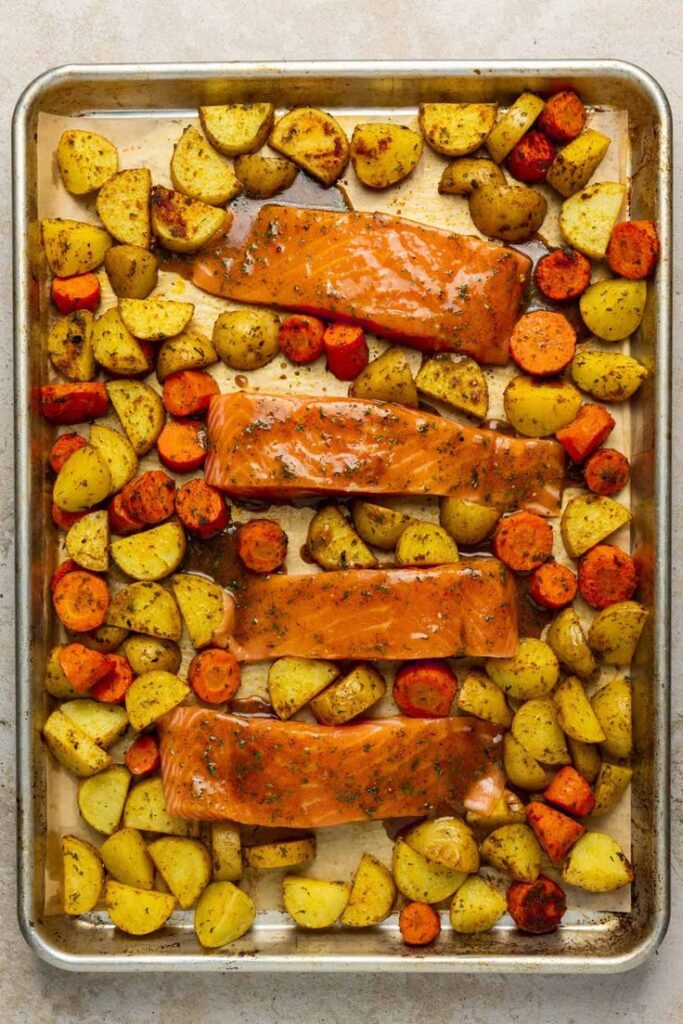
Sheet Pan Salmon with Roasted Potatoes
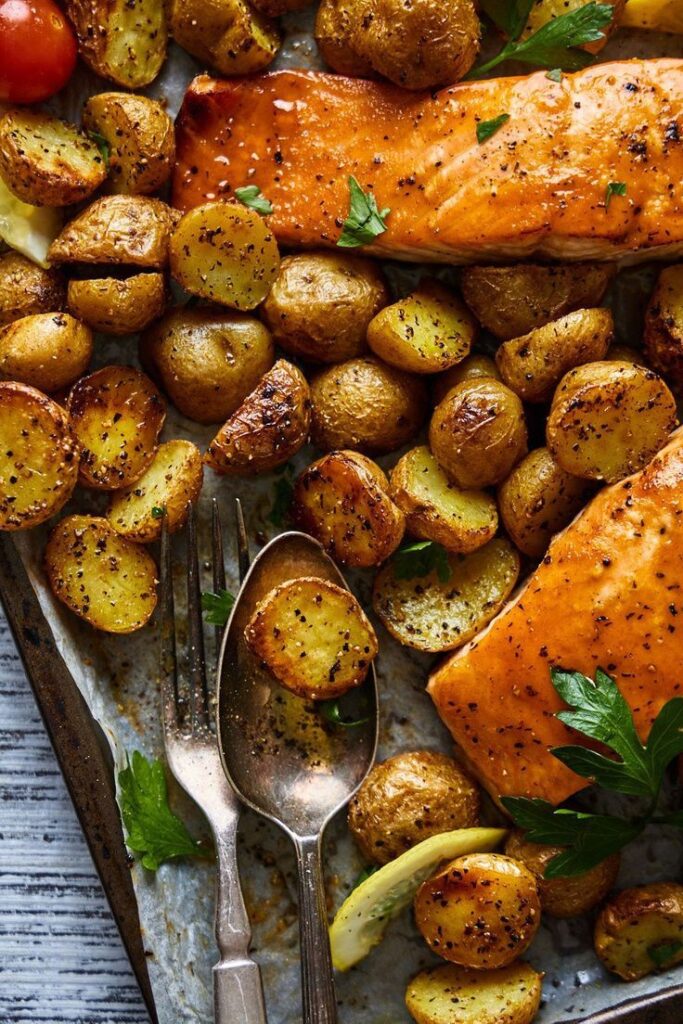
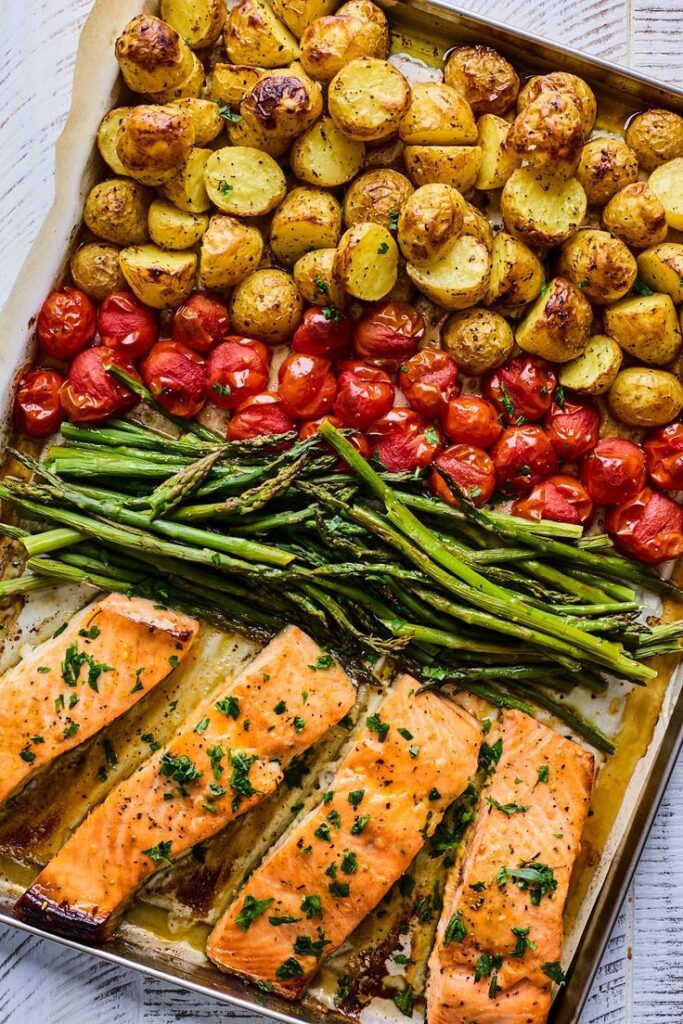
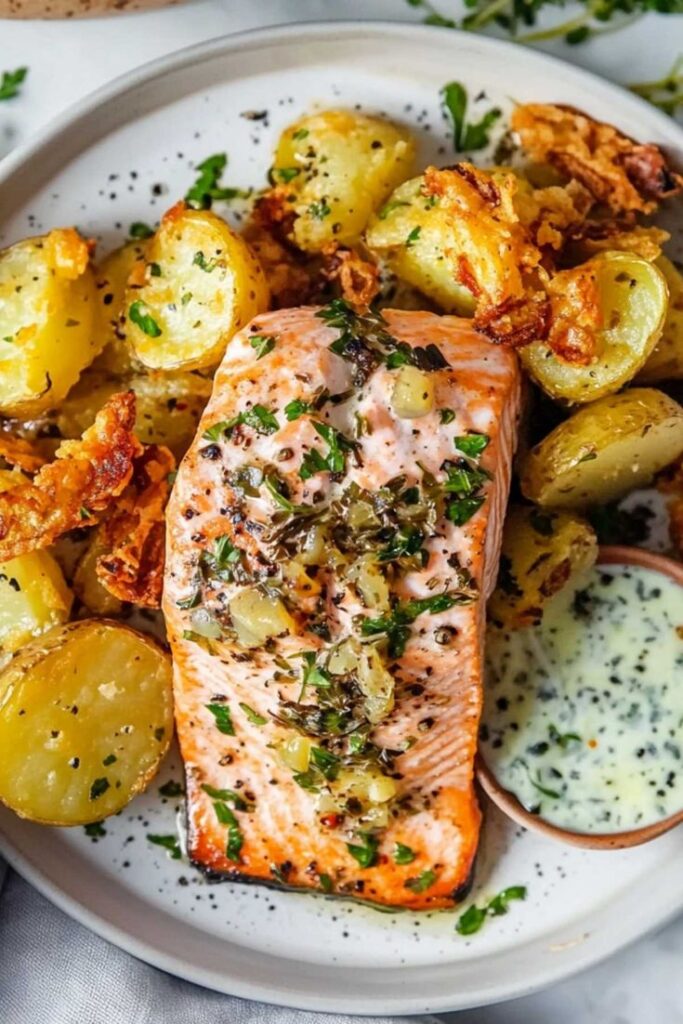
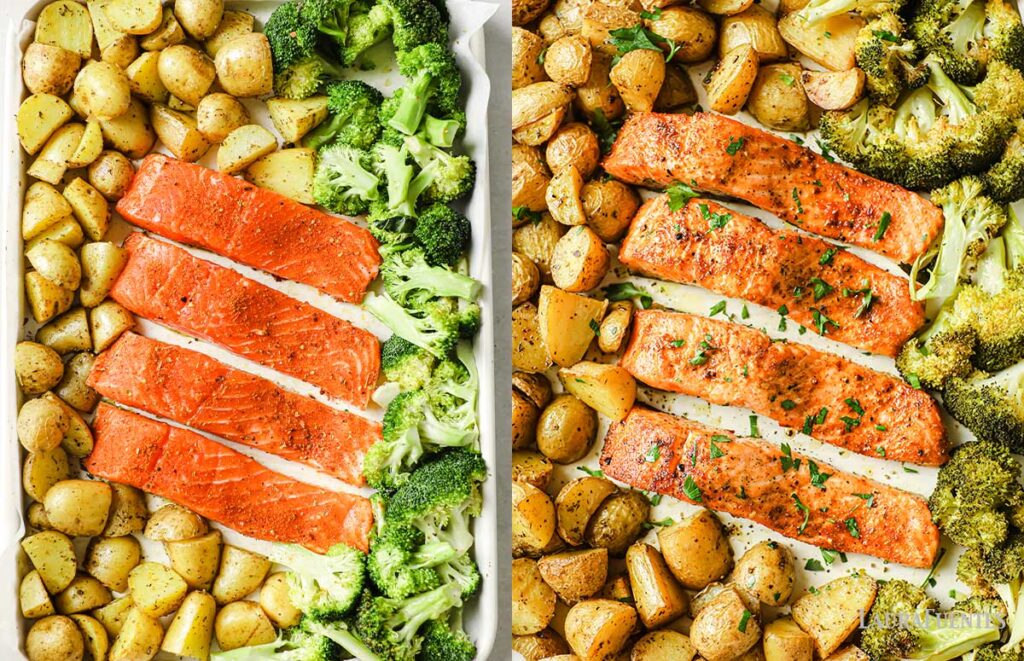
This fast method roasts everything together on one tray for crisp edges and short cook time. Cut potatoes into uniform cubes or wedges and toss with olive oil, salt, pepper, and rosemary or thyme.
Roast potatoes alone for 15–20 minutes until they start to brown. Nestle salmon fillets among the potatoes, drizzle with olive oil and lemon, and return to the oven for 10–12 minutes, depending on thickness.
For extra punch, mix garlic, Dijon, and lemon into a quick sauce and brush over the salmon before roasting. You’ll get crispy roasted potatoes and flaky baked salmon with minimal cleanup.
This works well when you want a bright, herb-forward dish rather than a creamy casserole.
Honey Garlic Salmon and Potato Bake
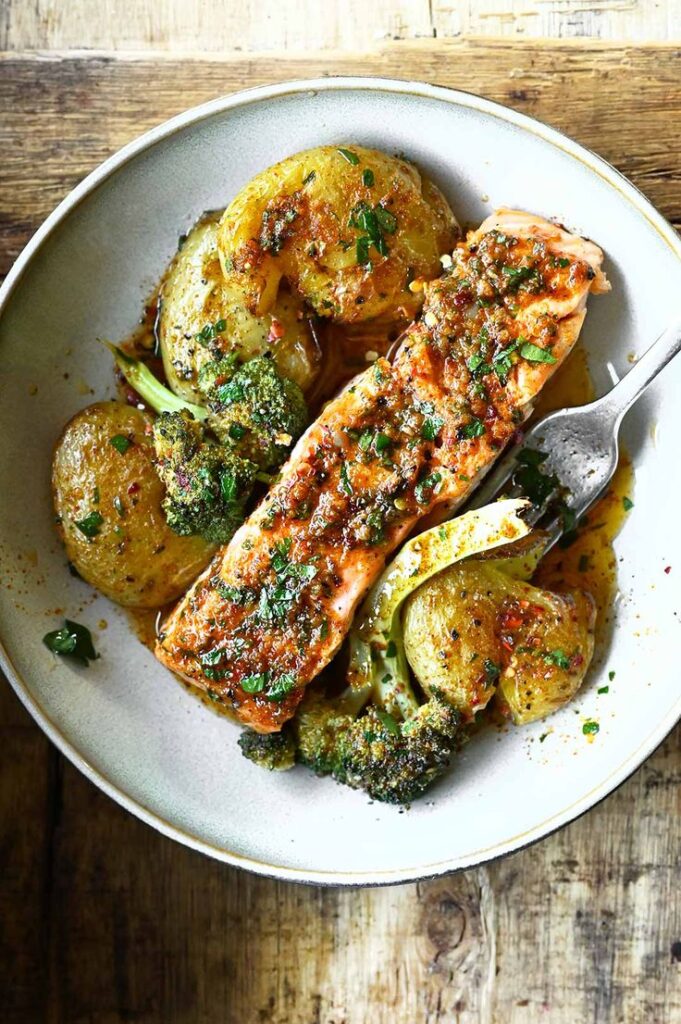
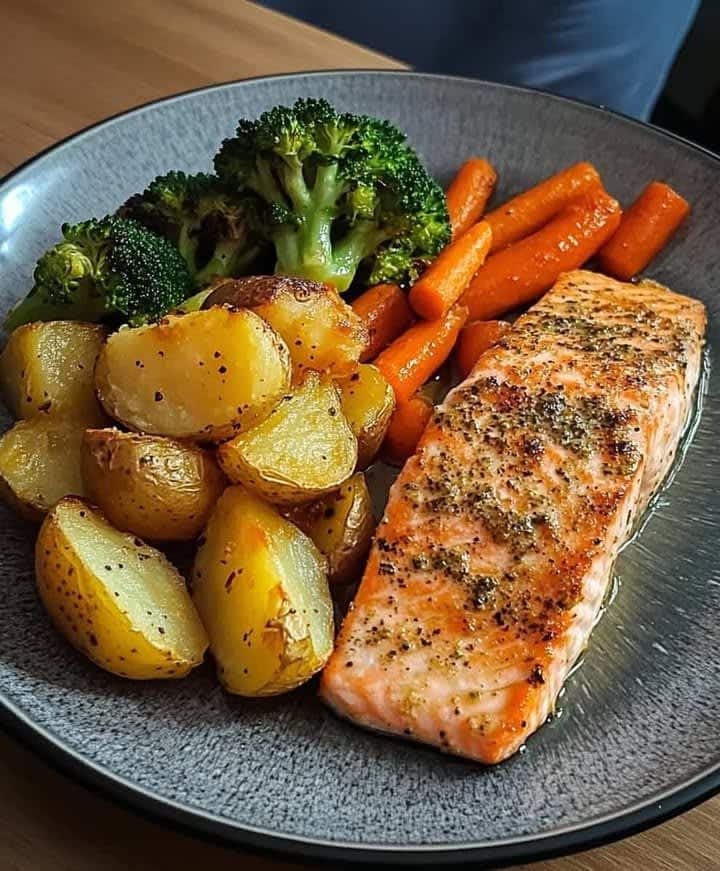
This variation blends sweet and savory for a family-friendly dinner. Mix honey, soy sauce (or tamari), minced garlic, and a splash of rice vinegar.
Toss potato slices or small new potatoes in oil and roast until tender. Place salmon over the partly cooked potatoes and brush the honey-garlic glaze over the fillets and potatoes.
Bake another 10–15 minutes until salmon flakes easily and the glaze thickens into a shiny coating. Sprinkle chopped parsley or green onions before serving.
The glaze caramelizes slightly on both fish and potatoes, giving you sticky edges and bold flavor. It’s a simple way to turn basic ingredients into a dish with strong, familiar tastes you can tweak with more garlic or less sugar.
Tips for Perfect Baked Salmon and Potatoes
You’ll learn how to get flaky salmon, avoid overcooking, and make potatoes golden and crispy. Follow specific steps for temperature, timing, and simple tricks that work every time.
Achieving the Right Texture
Pat the salmon dry with paper towels before seasoning. Dry fish browns better and holds its shape.
If your fillet has skin, put it skin-side down. This protects the flesh and lets the edges get crisp.
Use a single sheet pan so juices mingle with the potatoes. Keep the salmon on a small raised area or nestle it among the vegetables so it doesn’t sit in puddles.
Slice potatoes evenly—about 1-inch cubes or 1/4-inch slices. Uniform pieces cook at the same pace as the salmon.
Bake at a high temperature, around 400–425°F. This gives you a lightly crisp exterior and a tender inside.
Thicker fillets need a bit more time, maybe 4–6 minutes extra per half-inch of thickness.
How to Avoid Overcooked Salmon
Check doneness early. Stick an instant-read thermometer into the thickest part—125–130°F means moist, slightly firm salmon for medium-rare, while 145°F is fully cooked.
Pull the fish a few degrees below your target. Carryover heat will finish it off during a 3–5 minute rest.
Time things so the salmon goes in after the potatoes get a head start. Roast potatoes for 20 minutes, then add salmon and bake 12–15 minutes.
If you like visual cues, look for opaque flesh that flakes easily at the thickest point.
Secrets for Golden Crispy Potatoes
Toss potatoes with at least 1–2 tablespoons oil per pound. That way, they crisp instead of steaming.
Season generously with salt. Potatoes need more salt than you’d think.
Roast potatoes in a single layer with space between pieces. Flip them once halfway through to brown both sides.
For extra crisp, parboil 3–5 minutes, drain, and shake the pan to rough up the surfaces before oiling and roasting.
If you want more color, finish under the broiler for 1–2 minutes. Watch closely so nothing burns.
Toss in fresh herbs or a squeeze of lemon after baking. It brightens the salmon and potatoes without weighing them down.
Serving Suggestions and Side Pairings
This dish pairs well with bright, crisp vegetables and simple salads. Fresh herbs, a squeeze of citrus, or a light vinaigrette help lift flavors and add color.
What Goes Well with Salmon and Potato Bake
Pick sides that add texture and acidity. Roasted asparagus or green beans tossed with olive oil, lemon zest, and sea salt give a crisp contrast to the soft potatoes and flaky salmon.
A cucumber and dill salad with yogurt or lemon vinaigrette adds cool freshness. It brings a little herbal brightness, too.
For starch balance, go for small portions of wild rice or quinoa if you want more grain without heaviness.
If you crave more potato variety, try crunchy sweet potato wedges with smoked paprika. A citrusy finish—lemon wedges or a spoonful of lemon-dill sauce—really wakes up each bite.
Presentation and Garnishing Tips
Keep plating simple and colorful. Spoon a portion of the salmon and potato bake onto a warm plate, then add a few roasted asparagus spears beside it.
Scatter chopped parsley or dill over the top for a fresh, green pop. Add a little texture with toasted almond slivers or capers for briny contrast.
Use a lemon wedge or drizzle olive oil mixed with lemon juice across the top for shine. If serving family-style, garnish the baking dish with herb sprigs and lemon slices so guests can add extras as they like.
FAQ
What exactly is a salmon and potato bake?
A salmon and potato bake is a one-dish meal that layers or mixes cooked potatoes with salmon and a creamy sauce, then bakes until golden on top and set in the center, combining flaky salmon, tender potatoes, and a rich sauce.
How did salmon and potato bake become popular?
This dish originated from simple home cooking in Northern Europe where ingredients like salmon and potatoes are plentiful year-round, and it gained popularity for being budget-friendly, hearty, and easy to store as leftovers.
What are the main features of a salmon and potato bake?
The dish focuses on three main parts: salmon, potatoes, and a binding sauce, with potatoes either sliced or cubed, and salmon pieces placed among them, all baked with optional cheese or breadcrumbs for a crust.
How should I choose the best salmon fillets for this bake?
Look for salmon with bright color, firm flesh, and a clean smell, about 1 to 1.5 inches thick, either wild or farmed, and ideally seasoned lightly with salt, pepper, and lemon beforehand.
What are some tips for getting crispy potatoes in the oven?
Toss the potatoes with oil, season generously, roast them in a single layer, flip halfway for even browning, and consider parboiling briefly and finishing under the broiler for extra crispness.