
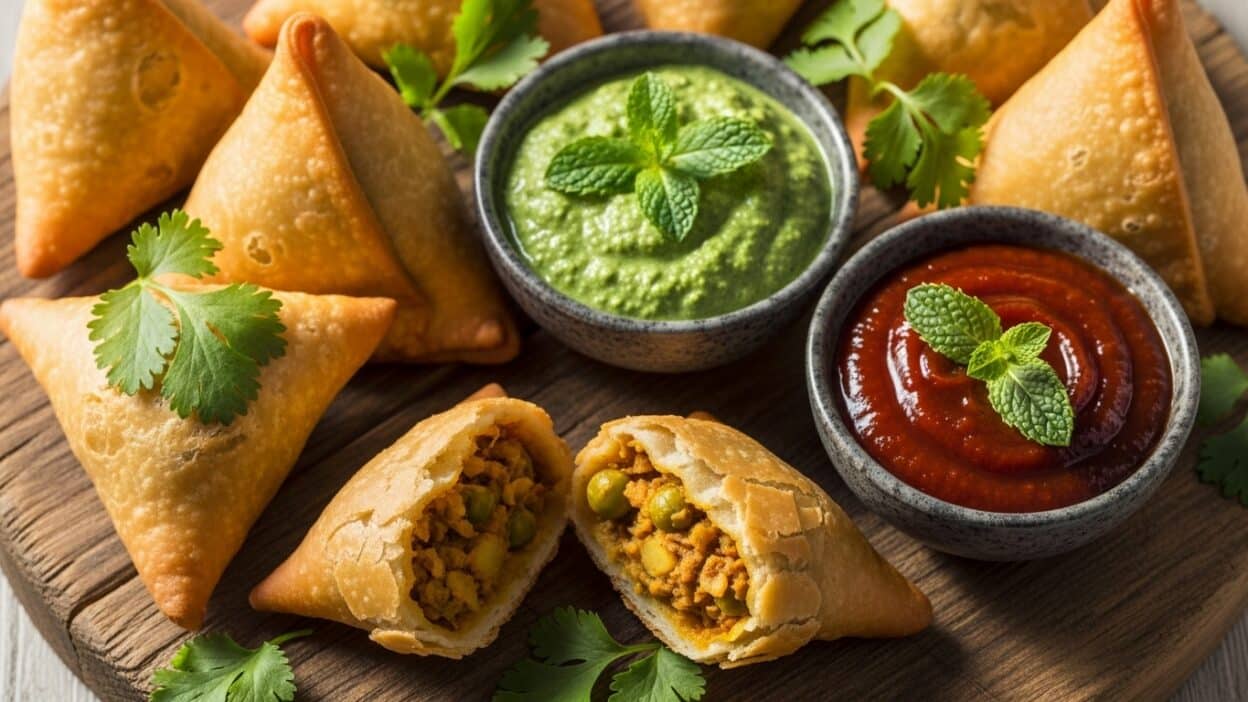
Oh, samosas! Just the mention of these golden, crispy, and utterly irresistible parcels of spiced goodness is enough to make anyone’s mouth water. Originating from the Middle East and Central Asia, samosas have found a cherished home in Indian cuisine, becoming a beloved snack, appetizer, and street food staple worldwide. There’s something truly magical about biting into that perfectly crunchy exterior, followed by a burst of warm, savory potato and pea filling. While they might seem a little intimidating to make at home, I promise you, with this friendly guide, you’ll be rolling, filling, and frying your way to samosa glory in no time! Imagine the aroma of cumin, coriander, and ginger wafting through your kitchen – pure culinary bliss. Get ready to impress your family and friends with these delightful, homemade treats that are far superior to any store-bought version. Let’s dive in and create some samosa magic together!
Ingredients
-
2 cups all-purpose flour
-
1/2 teaspoon salt
-
4 tablespoons ghee or vegetable oil (for the dough)
-
1/2 cup cold water (or as needed)
-
2 tablespoons vegetable oil (for the filling)
-
1 teaspoon cumin seeds
-
1/2 teaspoon fennel seeds ((optional))
-
1/2 cup finely chopped onion
-
1 tablespoon grated ginger
-
1 tablespoon minced green chili (adjust to taste)
-
3 medium potatoes (boiled, peeled, and mashed coarsely)
-
1/2 cup green peas (fresh or frozen)
-
1 teaspoon garam masala
-
1 teaspoon coriander powder
-
1/2 teaspoon turmeric powder
-
1/2 teaspoon red chili powder (adjust to taste)
-
1/2 teaspoon amchur (dry mango powder) ((optional, for tang))
-
Salt to taste
-
2 tablespoons fresh coriander leaves (chopped)
-
4-5 cups vegetable oil (for deep frying)
Instructions
First, let's make the dough: In a large bowl, combine the all-purpose flour and salt. Add the ghee or vegetable oil and rub it into the flour with your fingertips until the mixture resembles coarse breadcrumbs. This step is crucial for flaky samosas!
💡 Tip: Don’t skip rubbing in the fat; it creates pockets of tenderness in the dough.
Gradually add cold water, a tablespoon at a time, and knead until you form a firm, smooth dough. It shouldn't be too soft or sticky. Cover the dough with a damp cloth and let it rest for at least 30 minutes while you prepare the filling.
Now for the delicious filling: Heat 2 tablespoons of oil in a pan over medium heat. Add the cumin seeds and fennel seeds (if using), and let them splutter for a few seconds.
Add the chopped onion, grated ginger, and minced green chili. Sauté until the onion turns translucent and fragrant, about 3-5 minutes.
Stir in the boiled and coarsely mashed potatoes and green peas. Cook for 2-3 minutes, gently mashing any larger potato chunks.
Add the garam masala, coriander powder, turmeric powder, red chili powder, and amchur (if using). Season with salt to taste. Mix everything well and cook for another 5-7 minutes, stirring occasionally, until the spices are well incorporated and the mixture is fragrant. Remove from heat and stir in the fresh coriander leaves. Let the filling cool completely before shaping.
Time to shape the samosas: Divide the rested dough into 6-8 equal portions. Take one portion and roll it into an oval shape, about 6-7 inches long and 3-4 inches wide. It should be neither too thin nor too thick.
Cut the oval in half lengthwise, creating two semi-circles. Lightly moisten the straight edge of one semi-circle with water.
Bring the two ends of the straight edge together to form a cone. Press firmly to seal the seam, ensuring there are no gaps. This will be the base of your samosa cone.
Hold the cone in one hand and carefully spoon about 1-2 tablespoons of the cooled potato filling into it, leaving about 1/2 inch space from the top opening. Don't overfill!
Moisten the inside edge of the open cone with water. Now, pinch one side of the open seam to create a small pleat, then bring the other side over to meet it, pressing firmly to seal the top and create the classic triangular samosa shape. Ensure all edges are tightly sealed to prevent the filling from escaping during frying.
Repeat with the remaining dough and filling. Place the shaped samosas on a plate, covered with a damp cloth, to prevent them from drying out.
Finally, frying time: Heat the oil for deep frying in a deep pan or wok over medium-low heat. The oil temperature is key – it should be around 300-325°F (150-160°C). If the oil is too hot, the samosas will brown too quickly on the outside and remain raw inside. If it's too cold, they'll absorb too much oil.
Carefully slide a few samosas into the hot oil, making sure not to overcrowd the pan. Fry them in batches, turning occasionally, until they are golden brown and crispy on all sides, about 10-15 minutes per batch.
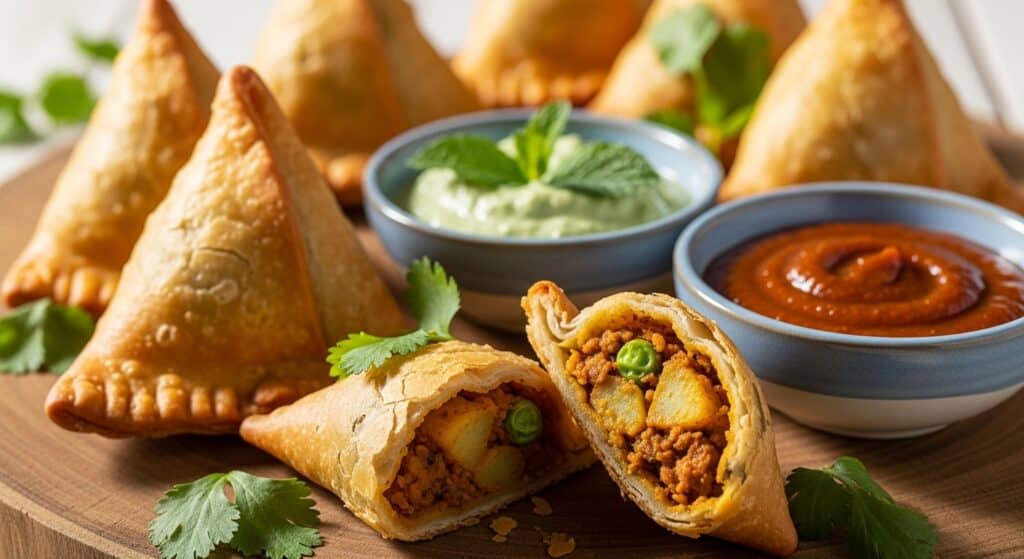
Remove the fried samosas with a slotted spoon and place them on a plate lined with paper towels to drain excess oil. Serve hot with your favorite chutney – mint, tamarind, or a spicy red chili chutney are all fantastic choices!
💡 Tips
- Dough Consistency is Key: Your dough should be firm, not sticky. A firm dough ensures a crispy, flaky crust.
- Don't Overfill: Overfilling makes it difficult to seal the samosas and can cause them to burst during frying.
- Seal Tightly: Ensure all seams are completely sealed to prevent the filling from escaping into the oil.
- Low and Slow Frying: Frying on medium-low heat is essential for a perfectly crispy, cooked-through samosa. High heat will brown the exterior too quickly while leaving the inside raw.
- Cool the Filling: Always use a completely cooled filling. Hot filling can make the dough soggy and difficult to work with.
🎨 Variations
- Paneer Samosas: Add crumbled paneer (Indian cottage cheese) to your potato and pea filling for a richer taste.
- Chicken Samosas: Replace potatoes with finely minced cooked chicken, seasoned with Indian spices for a non-vegetarian option.
- Vegetable Samosas: Incorporate finely diced carrots, bell peppers, or corn into the filling.
- Baked Samosas: For a healthier twist, brush the shaped samosas with a little oil and bake them in a preheated oven at 375°F (190°C) for 20-25 minutes, or until golden brown and crispy, flipping halfway.
- Spinach and Cheese Samosas: Mix sautéed spinach and feta or mozzarella cheese with a touch of garlic and chili for a fusion flavor.
📊 Nutrition
Recipe FAQs
Can I prepare samosas ahead of time?
Yes! You can prepare the filling a day in advance and store it in the refrigerator. You can also shape the samosas and store them uncooked in the fridge for up to 24 hours (covered with plastic wrap) or freeze them for up to a month. Fry them directly from frozen, adding a few extra minutes to the cooking time.
What kind of oil is best for frying samosas?
Any neutral-flavored oil with a high smoke point, like vegetable oil, canola oil, or peanut oil, works best for deep frying samosas.
My samosas aren’t crispy. What went wrong?
Lack of crispiness is usually due to the oil temperature being too low or too high. Too low, and they absorb too much oil and become soggy. Too high, and they brown too fast before becoming crispy throughout. Ensure your dough has enough fat rubbed in and that the oil is at the correct medium-low temperature throughout frying.
How do I reheat leftover samosas?
The best way to reheat samosas to restore their crispiness is in an oven or air fryer. Reheat in a preheated oven at 350°F (175°C) for 10-15 minutes, or in an air fryer at 325°F (160°C) for 5-7 minutes, until hot and crispy.
There you have it – your very own batch of homemade, perfectly crispy, and utterly delicious samosas! This recipe is a labor of love, but every bite is a testament to the effort and care you put in. Whether it's for a special occasion, a family gathering, or just a cozy night in, these samosas are guaranteed to bring smiles and satisfy cravings. Don't forget to pair them with your favorite chutneys and share your culinary creations with us! Happy cooking!