

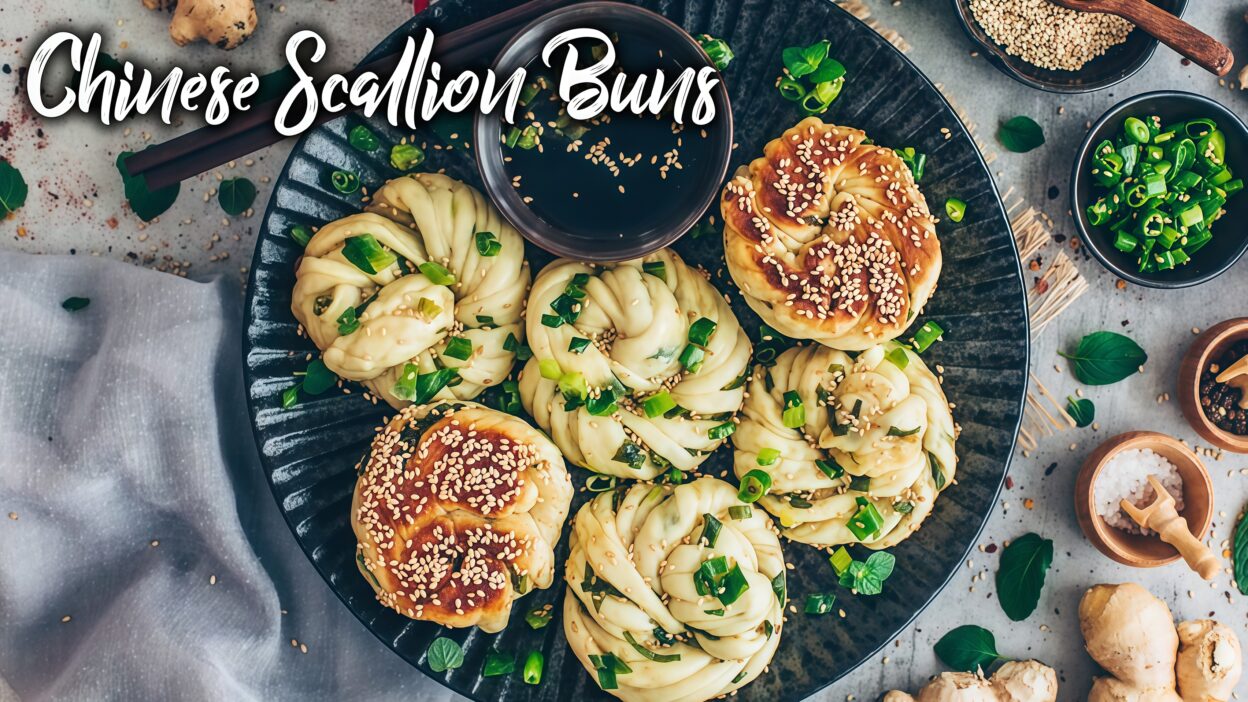
Soft on the inside, golden and crisp on the outside, Pan-Fried Scallion and Toasted Sesame Buns are a celebration of texture, aroma, and simple ingredients transformed through technique. These buns are deeply comforting yet refined, offering nutty sesame notes, fragrant scallions, and a satisfying pan-fried crust that makes them impossible to resist.
Inspired by East Asian savory breads and street-food–style buns, this dish sits somewhere between a bread, a snack, and a side. Whether served fresh from the pan for breakfast, alongside soup for lunch, or as a shareable appetizer, scallion and sesame buns bring warmth and flavor to any table.
What Are Pan-Fried Scallion and Sesame Buns?

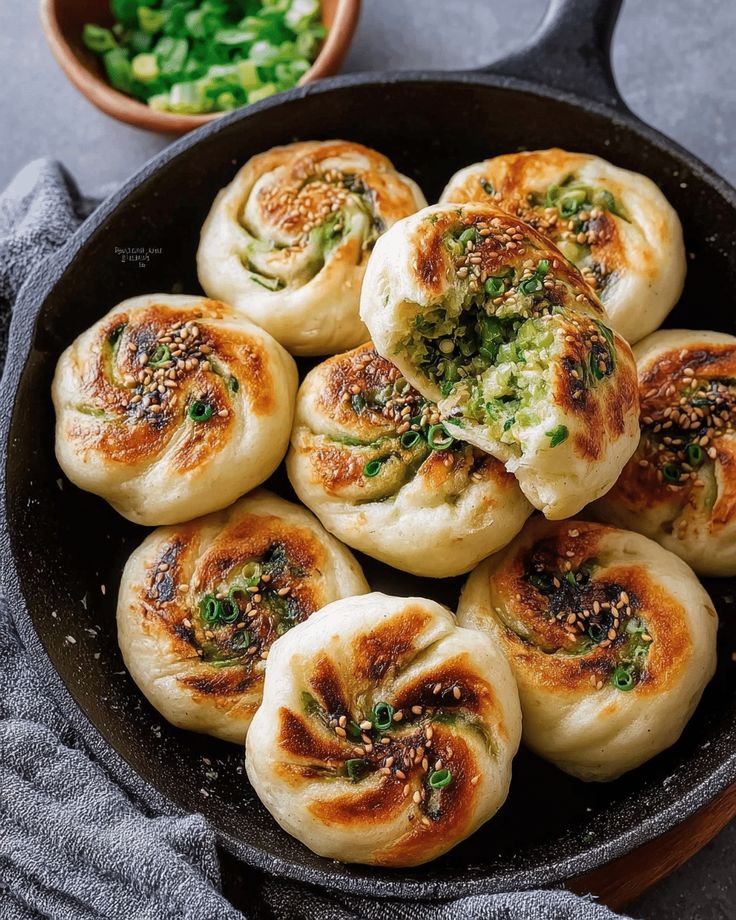
Pan-fried scallion and toasted sesame buns are soft yeast-based or dough-based buns filled or topped with scallions and sesame seeds, then cooked in a shallow pan rather than baked or steamed. The pan-frying method creates a crispy, golden base while keeping the interior fluffy and tender.
Unlike deep-fried breads, these buns use minimal oil, relying instead on controlled heat and patience to develop their signature crust. The toasted sesame seeds add richness and a nutty aroma that pairs beautifully with the mild sharpness of scallions.
Why This Flavor Combination Works
Scallions and sesame are a classic pairing for good reason. Together, they create balance:
- Scallions bring freshness, mild onion flavor, and color
- Sesame seeds add nuttiness, depth, and aroma
- Neutral dough provides a soft canvas for savory flavors
- Pan-frying enhances the contrast between crisp and fluffy textures
The result is a bun that feels indulgent yet balanced, simple yet layered.
Cultural Inspiration and Influence
Pan-fried buns appear across many Asian cuisines, from Chinese scallion breads to Korean and Japanese savory buns. While recipes vary, the core idea remains the same: dough enriched with aromatics, cooked until crisp on the outside and tender within.
These buns are often enjoyed as:
- Street food snacks
- Breakfast items
- Tea-time accompaniments
- Side dishes for soups and stews
Their versatility and comforting nature have helped them remain popular across generations.
Ingredients Overview
While recipes vary slightly, most pan-fried scallion and toasted sesame buns rely on pantry staples.
Key Components

- All-purpose flour
- Yeast or baking powder (depending on style)
- Warm water or milk
- Neutral oil
- Fresh scallions, finely chopped
- Toasted sesame seeds
- Salt
Optional additions like sugar, sesame oil, or white pepper can enhance flavor without overwhelming the buns.
The Role of Toasted Sesame Seeds
Toasted sesame seeds are more than just a garnish—they’re a defining flavor. Toasting activates the oils in the seeds, intensifying their aroma and adding complexity.
Using pre-toasted sesame seeds saves time, but lightly toasting them yourself in a dry pan delivers maximum fragrance. Even a small amount can dramatically elevate the final result.
Dough Texture and Structure


The dough for these buns should be soft, pliable, and slightly elastic. A well-hydrated dough ensures a fluffy interior, while proper kneading develops structure that holds up during pan-frying.
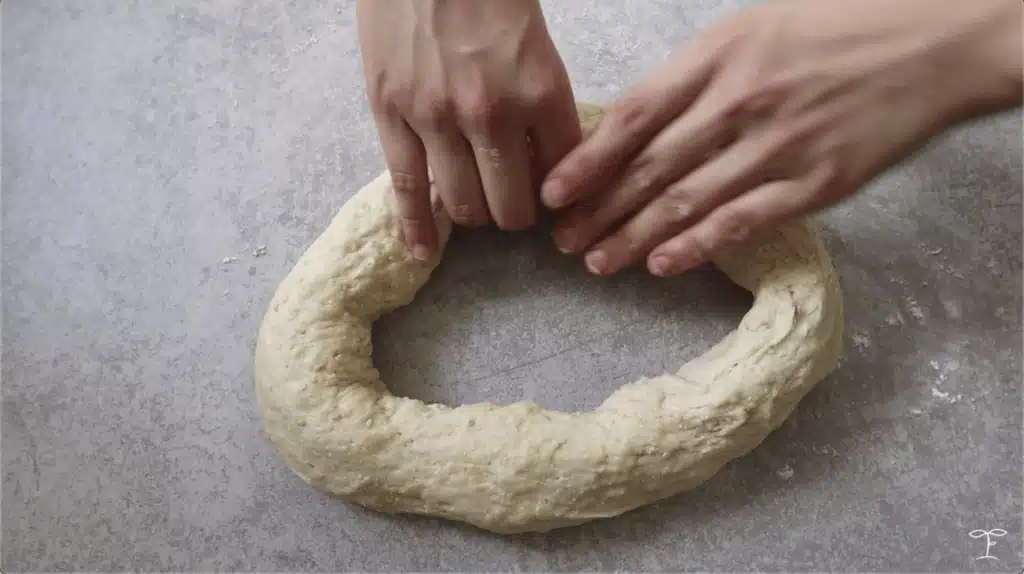
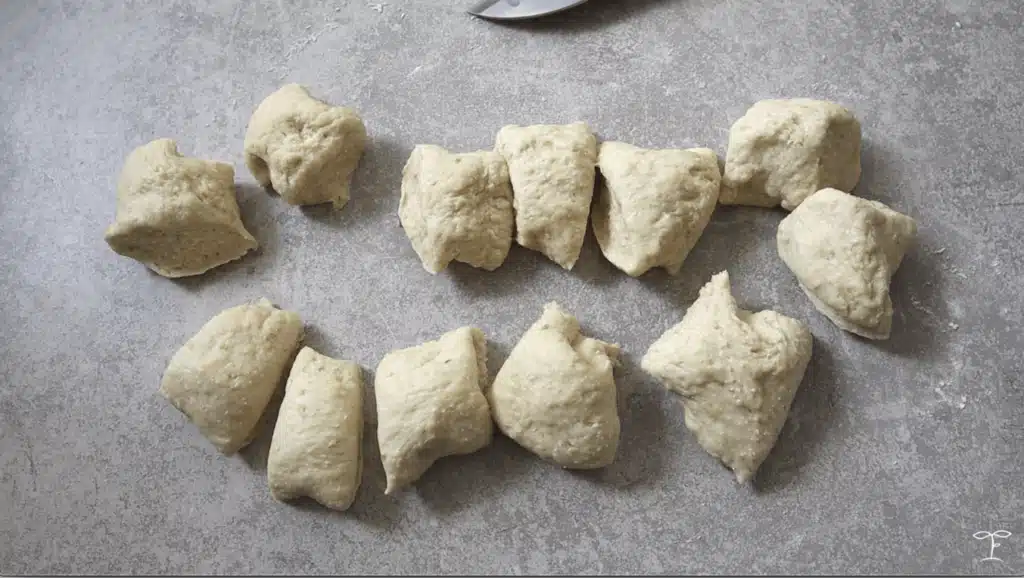
After mixing and kneading, resting the dough is essential. This relaxes the gluten, making the buns easier to shape and resulting in a lighter texture.
Shaping the Buns
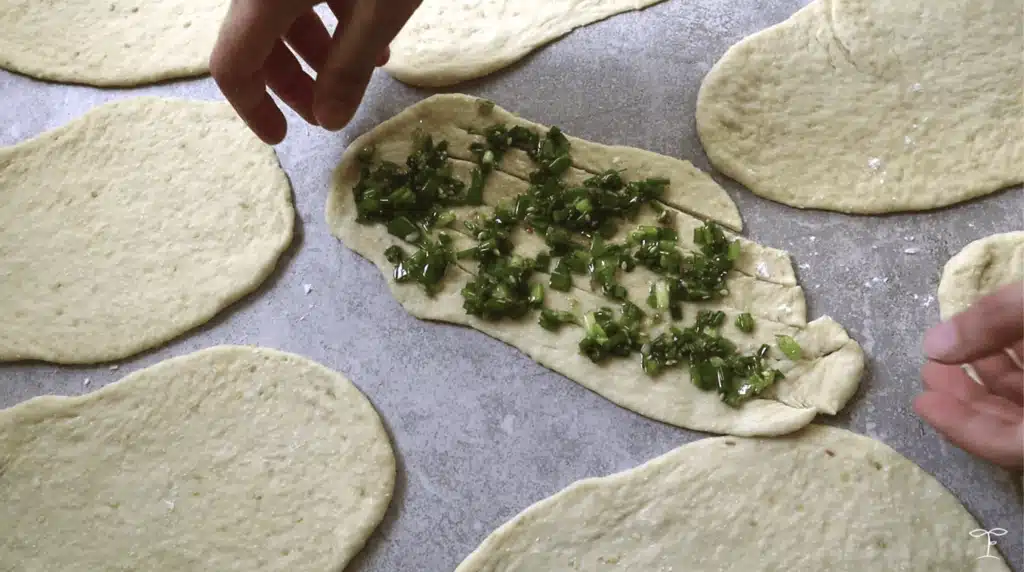
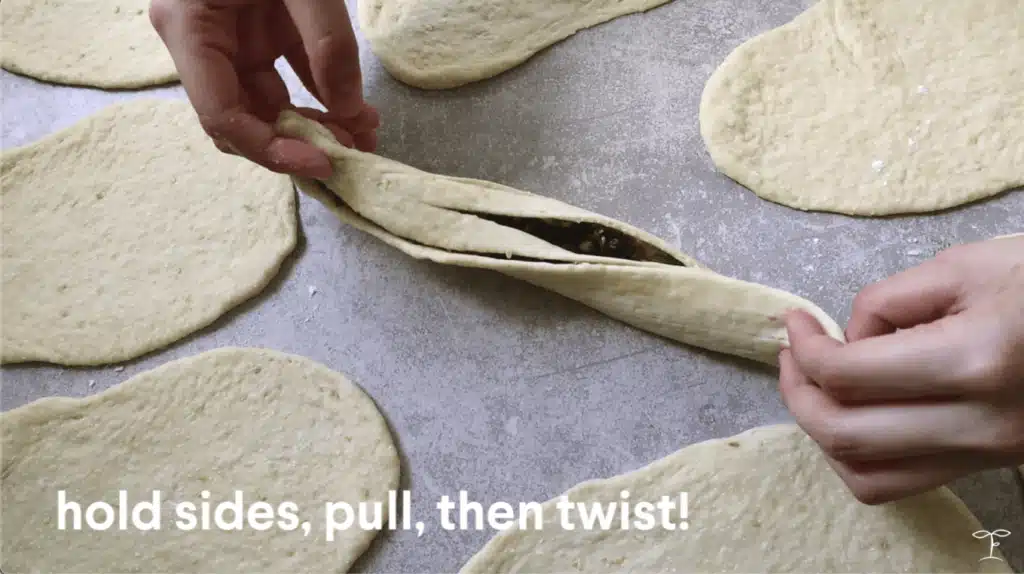
Shaping can be simple or decorative, depending on preference. Common approaches include:
- Rolling dough into balls and flattening slightly
- Folding scallions into layers for spiral buns
- Sealing scallions inside filled buns
Regardless of shape, even thickness is key to ensuring the buns cook evenly without burning.
Pan-Frying Technique: Where the Magic Happens

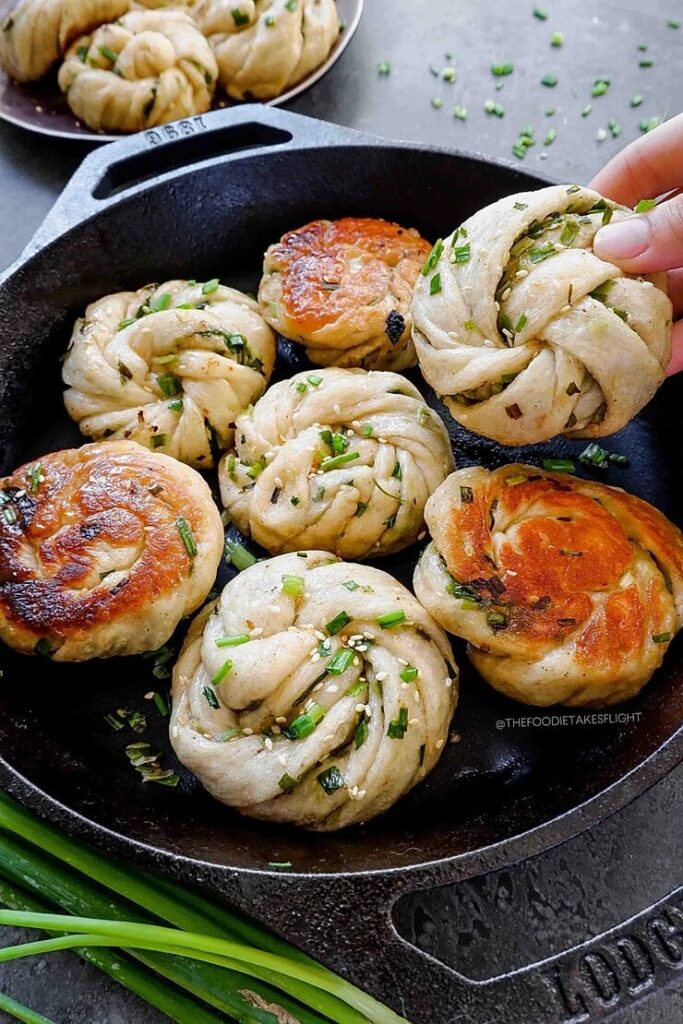
Pan-frying is what sets these buns apart. The goal is controlled heat that allows the bottom to crisp while the inside cooks gently.
Key Pan-Frying Principles
- Use a heavy-bottomed skillet for even heat
- Preheat oil gently, not smoking hot
- Cook the buns covered initially to trap steam
- Uncover toward the end to crisp the bottoms
This combination of steam and direct heat creates the signature contrast between soft interior and crunchy exterior.
Texture: Crispy, Soft, and Satisfying
A perfect pan-fried scallion and sesame bun should offer:
- A golden, crackly base
- A tender, bread-like interior
- Even distribution of scallions
- Toasted sesame aroma in every bite
The textural contrast is what makes these buns so addictive.
Serving Suggestions
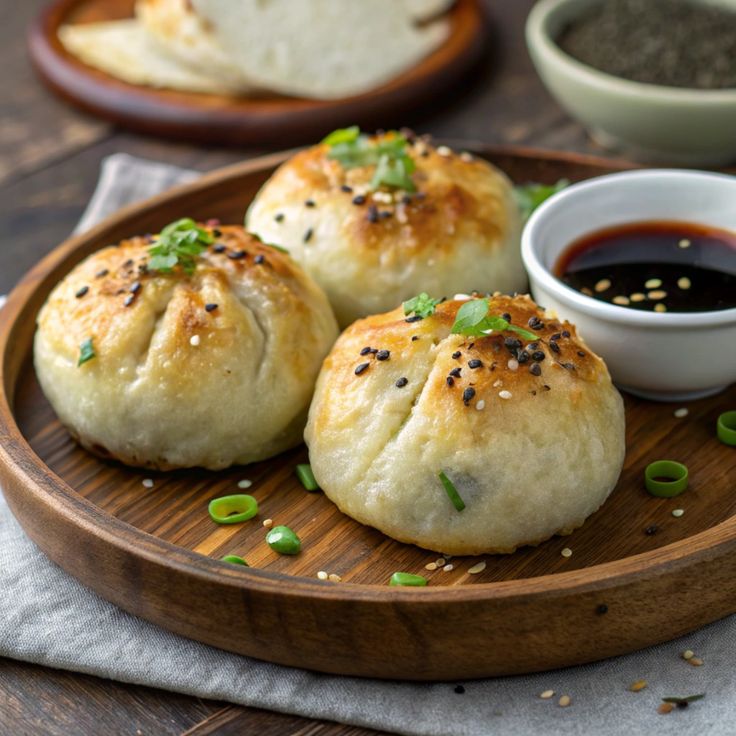

Pan-fried scallions and toasted sesame buns can be enjoyed in many ways:
- As a standalone snack with tea
- Alongside hot soup or congee
- With dipping sauces like soy sauce, chili oil, or black vinegar
- As part of a dim sum–style spread
They’re best served warm, straight from the pan.
Make-Ahead and Storage Tips
These buns are at their best fresh, but they can be prepared ahead with a few adjustments.
- Dough can be made and refrigerated overnight
- Cooked buns can be refrigerated for up to 2 days
- Reheat in a skillet to restore crispness
Avoid microwaving, which softens the crust.
Common Mistakes to Avoid
- Cooking over heat that’s too high, causing burning
- Skipping the resting time for the dough
- Using too much oil, leading to greasy buns
- Under-seasoning the dough
- Crowding the pan
Patience and moderation are key to achieving the ideal result.
Why These Buns Are So Comforting
Pan-fried scallions and toasted sesame buns appeal on multiple levels. They’re warm, aromatic, and deeply satisfying, yet made from humble ingredients. The process of shaping and pan-frying feels grounding, while the final product offers immediate reward.
They’re the kind of food that feels nostalgic—even if you’re trying them for the first time.
Final Thoughts
Pan-Fried Scallion and Toasted Sesame Buns are a beautiful example of how simple ingredients and thoughtful technique can create something truly special. With their crisp bottoms, fluffy interiors, and fragrant sesame-scallion flavor, these buns are comforting, versatile, and endlessly appealing.
Whether you serve them as a snack, side, or centerpiece, they bring warmth and character to the table—proving once again that some of the most memorable foods come from the simplest ideas.
FAQ
Why do scallions and sesame seeds work so well together in these buns?
Scallions provide freshness and mild onion flavor, while sesame seeds add nuttiness and aroma, creating a well-balanced and layered flavor combination.
How does the pan-frying method influence the texture of these buns?
Pan-frying produces a crispy, golden base with a tender interior, offering a delightful contrast in texture that makes the buns especially satisfying.
What are Pan-Fried Scallions and Toasted Sesame Buns?
They are soft yeast or dough-based buns filled or topped with scallions and sesame seeds, pan-fried to create a crispy, golden crust while keeping the inside fluffy and tender.
What are some common ways to serve these buns?
They can be enjoyed as a snack with tea, alongside soups, with dipping sauces like soy sauce or chili oil, or as part of a dim sum spread, preferably when served warm.
Can these buns be made ahead of time and stored?
Yes, the dough can be prepared and refrigerated overnight, and cooked buns can be stored in the refrigerator for up to two days; reheating in a skillet helps restore their crispness.


