

You can make rich, restaurant-style French onion soup at home with simple steps, common ingredients, and a little patience. This recipe shows how to caramelize onions, build a deep beefy broth, and top the bowls with crisp, cheesy bread for a classic result you’ll love.
Follow clear, step-by-step guidance on the onions, broth, and bread, so you get the right flavor and texture every time. Practical tips will help you boost flavor, store leftovers, and reheat the soup without losing that melted-cheese finish.
Classic French Onion Soup Overview
You’ll find a simple set of parts that make this soup special: deeply browned onions, a rich beef or stock base, and toasted bread topped with melted cheese. Each part affects texture and taste, so small choices matter.
French Culinary Origins


French onion soup started as a humble, peasant dish in France, where cooks turned cheap ingredients into a warm meal. Onions were plentiful and inexpensive, and slow cooking them released sugars that create the soup’s sweet, savory base.
By the 18th and 19th centuries, it moved into urban kitchens and bistros. Cooks mixed caramelized onions with beef broth or stock and sometimes a splash of wine or brandy. The broiled cheese-and-bread topping became a bistro signature, turning a simple soup into a plated, crowd-pleasing dish.
Traditional recipes use dry white wine or sherry and beef stock for depth. You’ll also see regional touches—different cheeses or a touch of thyme—but the core stays the same: long-cooked onions, clear savory broth, and a gratinéed bread topping.
Flavor Profile
The dominant flavor comes from the onions’ caramelization. As you cook them slowly, natural sugars concentrate, giving the soup a deep, sweet note balanced by savory stock. That mix creates the classic sweet-and-savory backbone.
Acidity and depth often come from wine, sherry, or a splash of vinegar. These ingredients lift the sweetness and add a little brightness. Salt and black pepper sharpen the broth, while herbs like thyme add a gentle savory aroma without overpowering the onions.
Texture plays a big role. The broth should feel silky, the onions tender but intact, and the bread-cheese topping crisp at first and then richly gooey. Typical cheeses are Gruyère or Comté for their nutty, melting quality; Parmesan can add a salty bite.
Essential Ingredients for French Onion Soup
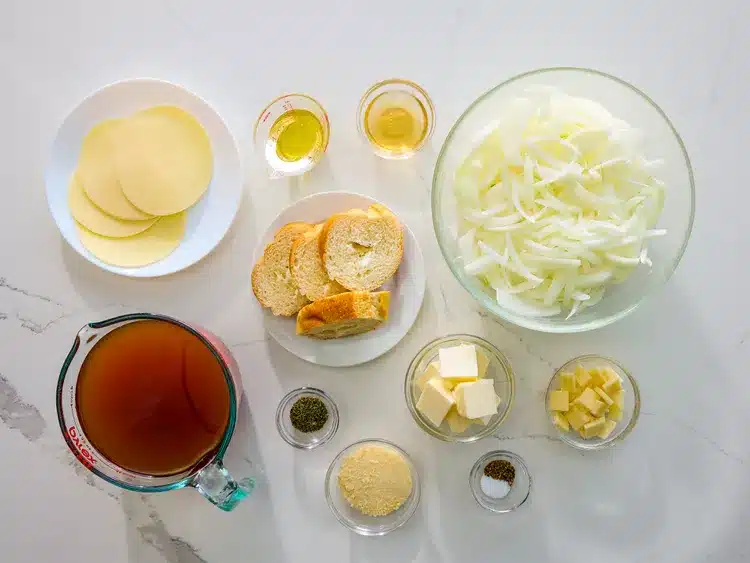
You need sweet, well-browned onions, a flavorful beef or vegetarian broth, and cheese that melts smoothly. Small choices—onion type, broth concentration, and cheese strength—shape the final taste and texture.
Best Onion Varieties
Choose yellow (Spanish) onions for the best balance of sweetness and body. They caramelize well and give the soup a deep, slightly sweet flavor. Use 3–4 large yellow onions for a family-sized pot.
You can mix in a few sweet onions (Walla Walla or Vidalia) if you want extra sweetness. Avoid strong raw varieties like red onions; they don’t soften into the same rich flavor when caramelized.
Peel and slice onions thinly and uniformly for even browning. Cook slowly over medium-low heat until deep amber—this step creates the soup’s signature taste, so don’t rush it.
Choosing the Right Cheese
Pick Gruyère as your first choice for nutty flavor and smooth melt. It browns nicely under the broiler and creates that stretchy, gooey top you expect.
Comté or Emmental works well as an alternative; they melt similarly but vary in flavor intensity. For budget-friendly options, use a good-quality Swiss or a blend of Swiss and mild cheddar.
Grate the cheese fresh and pile it on thick over toasted baguette slices. That layer ensures an even, bubbly crust and good flavor in each bite.
Selecting the Ideal Broth
Use a rich beef stock if you want classic, savory depth. Choose low-sodium beef broth so you control salt levels during cooking.
If you prefer a lighter or vegetarian version, use a high-quality mushroom or vegetable stock with umami notes. Add a splash of dry white wine or sherry to lift the broth’s acidity and round the flavor.
Simmer the caramelized onions in the broth for at least 20–30 minutes to let flavors meld. Taste and adjust seasoning with salt and pepper before assembling the bowls and adding cheese.
Step-by-Step Cooking Instructions
You will cook slowly, watch the color change, and finish by heating the broth until flavors blend. Pay attention to heat control, timing, and taste as you go.
Caramelizing Onions

Slice 2–3 large yellow onions about 1/8-inch thick. Use a sharp knife, so slices stay even and cook at the same rate. Heat 2 tbsp butter plus 1 tbsp oil in a heavy-bottomed pot over medium-low heat until butter melts.
Add the onions and a pinch of salt. Stir every 4–5 minutes at first, then more often as they soften. Lower the heat if they start to brown too fast; you want a deep golden color, not black bits. This step takes 30–45 minutes. If the pan gets dry, add a splash of water or a teaspoon of stock to loosen browned bits and prevent burning.

Toward the end, add 1 tsp sugar and 1–2 tsp balsamic or sherry vinegar to boost sweetness and balance. Taste as you go and stop when onions are richly brown, glossy, and have a sweet, savory aroma.
Deglazing the Pot

Raise the heat to medium and add 1/3–1/2 cup dry white wine or sherry. Use a wooden spoon to scrape the browned bits (fond) from the bottom of the pot. Those browned bits hold a lot of flavor.
Let the alcohol simmer off for 2–3 minutes so only the flavor remains. If you prefer no alcohol, use a splash of vinegar plus extra stock. After the wine reduces, add 4 cups beef stock (or a mix of beef and chicken) and 1–2 sprigs thyme or 1/2 tsp dried thyme. Stir to combine and bring to a gentle simmer.
Taste and adjust salt and pepper now. Deglazing and seasoning here set the base flavor for the whole soup.
Simmering the Soup

Once the broth is in, lower the heat to a steady simmer. Cook uncovered for 20–30 minutes to let flavors meld, and the stock reduces slightly. Skim any foam or excess fat from the surface with a spoon.

If you want a richer flavor, simmer for up to 45 minutes and reduce 10–15% of the liquid. Remove thyme stems and taste again, adding salt or a splash of vinegar if it feels flat. Keep the soup warm while you prepare croutons and cheese for broiling.
Perfecting the Bread and Cheese Topping
Choose a sturdy, flavorful bread and a cheese that melts well. Toast or grill the bread first so it stays crisp under the hot soup, and use a melting cheese like Gruyère or a mix that adds nuttiness and stretch.
Types of Bread for Topping
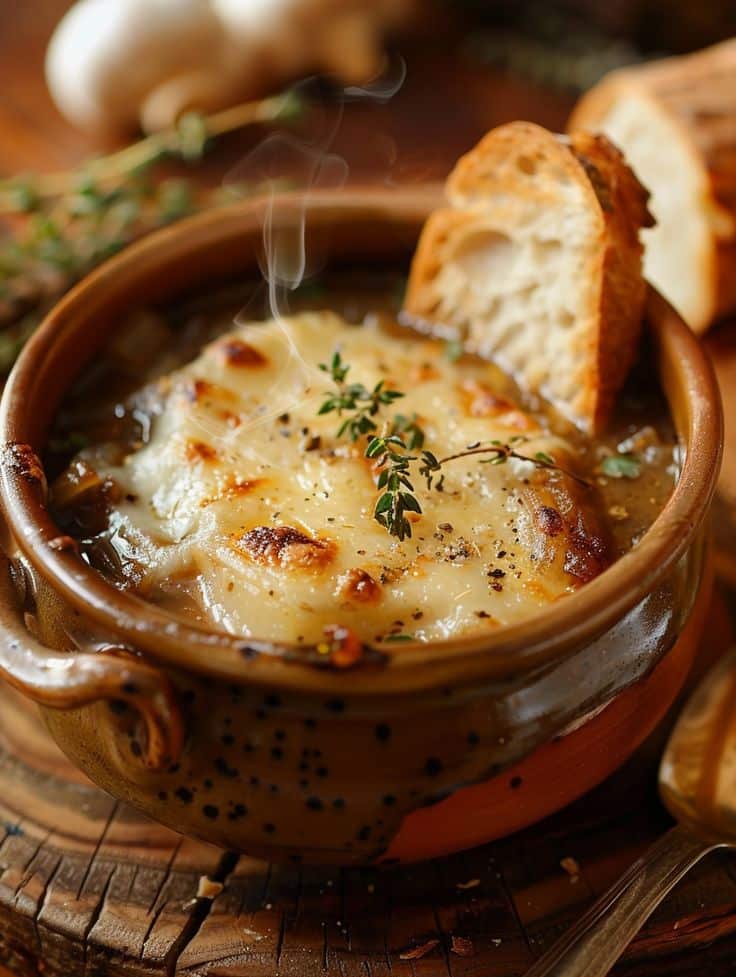
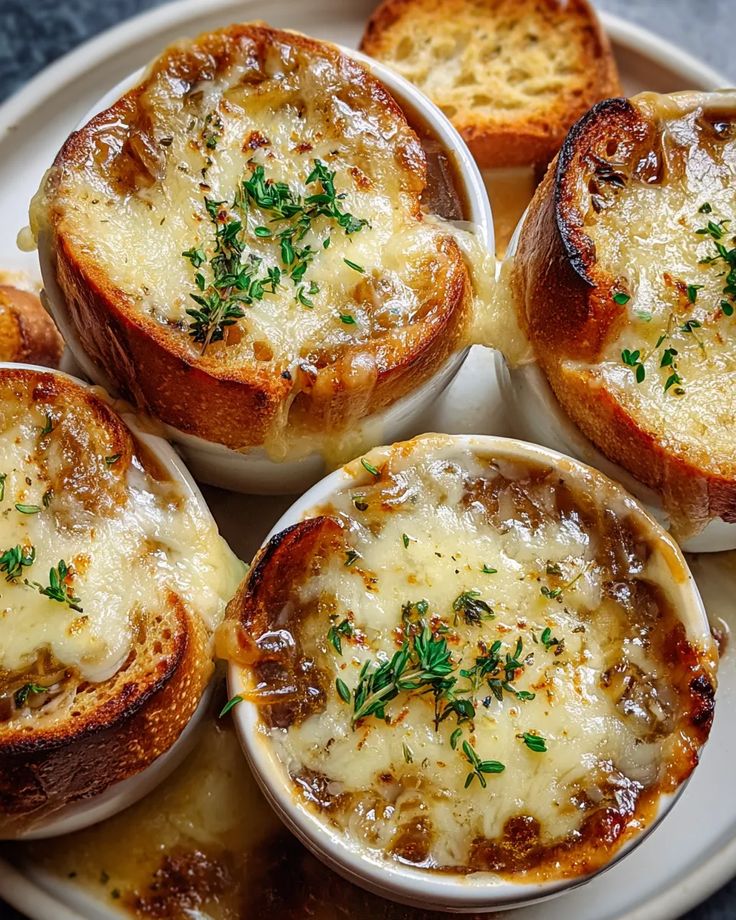
Pick a dense, crusty bread, so it won’t fall apart in the soup. French baguette, sourdough, or a country loaf works best because they hold up when soaked and still give a bit of bite.
Slice the bread 1/2 inch thick for a good balance of soak and structure. Brush each slice lightly with olive oil or butter and toast under the broiler or in a skillet until golden to prevent sogginess.
If you want extra flavor, rub the toasted bread with a cut garlic clove before topping with cheese. For a gluten-free option, use a firm gluten-free artisan loaf and follow the same toasting step.
Melting Cheese Techniques
Use Gruyère for its nutty flavor and smooth melt, or combine Gruyère with mozzarella for extra stretch. Aim for about 1 to 1.5 ounces (30–45 g) of cheese per slice of bread.
Grate cheese finely to help it melt evenly. Place the cheese-topped bowls under a hot broiler for 2–4 minutes until the cheese bubbles and browns. Watch closely to avoid burning.
For a browned crust without a broiler, finish the bowls with a torch or place them in a preheated 450°F oven for a few minutes. If you prefer a thicker crust, sprinkle a little Parmesan on top before broiling for added color and flavor.
Tips for Enhancing Flavor
Focus on building a deep, savory onion taste, boosting the broth, and choosing toppings that melt and brown well. Small, precise additions—seasonings, an alcohol choice, and finishing touches—make the biggest difference.
Recommended Seasonings
Salt is the single most important seasoning. Add a little early to help draw moisture from the onions and a pinch more at the end to balance the sweetness. Use kosher salt for even seasoning.
Black pepper adds warmth; freshly ground is best. Add during the last minutes of cooking so the pepper stays bright. A small bay leaf, while the broth simmers, gives a subtle herbal backbone—remove before serving.
Thyme pairs naturally with onions and beef broth. Use fresh sprigs tied together or 1/2 teaspoon dried. For a deeper savory note, stir in 1/2 to 1 teaspoon Worcestershire sauce or a teaspoon of soy sauce near the end; both boost umami without changing the soup’s character.
If you like a hint of heat, add a pinch of crushed red pepper flakes. For a gentle sweetness, a teaspoon of balsamic vinegar or brandy added off heat brightens the flavors.
Wine Pairings for Added Depth
Dry white wine or a light dry sherry works well when deglazing after the onions caramelize. Use 1/3 to 1/2 cup and scrape the browned bits from the pan; this adds acidity and complexity without overpowering the soup.
If you prefer red, choose a light- to medium-bodied red like Pinot Noir. Use the same amount—about 1/3 cup—and simmer to cook off the alcohol. Red adds a richer, deeper flavor that pairs with beef broth.
Avoid sweet wines. If you skip wine, use 1 tablespoon of vinegar (red wine or apple cider) or extra broth to replace the acidity. Always taste after adding alcohol, then simmer 3–5 minutes to meld flavors and reduce sharpness.
Serving and Presentation Ideas
Serve the soup hot with a crisp, cheesy toast and a simple, salty finish. Choose oven-safe bowls for broiling, and set out small plates for the toast so your table stays tidy.
Traditional Serving Suggestions


Serve French onion soup in oven-safe crocks or ramekins so you can broil the cheese directly on top. Place a slice of toasted baguette or a round of baguette on the soup, cover with grated Gruyère or Swiss, then broil 2–4 minutes until golden and bubbling. Use a slotted spoon or small plate to lift the toast if you want to keep bowls neat while eating.
Pair the soup with a simple green salad dressed in vinaigrette to cut the richness. Offer crusty bread or extra toasted baguette slices on the side. For drinks, a dry white wine or light red matches well; sparkling water also refreshes the palate.
Creative Garnishes
Add texture and flavor with a few precise garnishes. Sprinkle finely chopped fresh thyme or chives over the melted cheese for a fresh herbal note. A small drizzle of sherry or balsamic reduction just before serving brightens the broth without adding extra heat.
Try thin prosciutto crisps or a few toasted walnuts for crunch if you want contrast. For a touch of richness, shave a little Parmigiano-Reggiano over the cheese after broiling. Keep garnishes minimal and placed on the cheese or rim so each spoonful stays balanced.
Storage and Reheating Advice
Store soup without the bread and cheese. Put the soup in airtight containers and cool it to room temperature within two hours to stay safe.
Keep it in the refrigerator for up to 3–4 days. Label the container with the date so you know when to use it.
You can freeze the soup for 2–3 months. Freeze only the broth and onions; leave out the bread and cheese to avoid sogginess.
Reheat on the stovetop over medium heat, stirring occasionally. Bring the soup to a gentle simmer and heat until it reaches 165°F (74°C) to kill any bacteria.
If you prefer the oven method for bowls with cheese and bread, reheat the soup first on the stove, then add the bread and cheese and broil until bubbly. Watch closely to prevent burning.
Thaw frozen soup overnight in the fridge for the best texture. If you need it faster, use the microwave on the defrost setting, then finish heating on the stove.
Quick reheating checklist:
- Refrigerator: 3–4 days
- Freezer: 2–3 months (no bread/cheese)
- Safe reheating temp: 165°F (74°C)
Cool, store, and reheat gently to keep flavor and texture. Add bread and cheese only when you’re ready to serve.
FAQ
What are the key ingredients needed to make traditional French onion soup?
The key ingredients for traditional French onion soup are well-browned sweet onions, a flavorful beef or vegetable broth, and cheese that melts smoothly, such as Gruyère.
What type of cheese is best for melting on top of French onion soup?
Gruyère is the best choice for its nutty flavor and excellent melting qualities, but Comté, Emmental, or a good-quality Swiss can also work well.
How do I caramelize onions properly for the soup?
Slice onions thinly and cook them slowly over medium-low heat with butter, oil, and a pinch of salt, stirring frequently, until they turn deep golden brown, glossy, and sweet, which takes about 30-45 minutes.
How can I add depth and flavor to the broth for my onion soup?
Deglaze the caramelized onions with dry white wine or sherry, scrape up the browned bits from the pot, then add beef or vegetable stock, herbs like thyme, and seasonings to enhance the flavor.
What is the best way to serve and garnish French onion soup?
Serve hot in oven-safe bowls with a slice of crispy, toasted bread topped with melted cheese, broiled until bubbly and golden, then garnish with fresh herbs like thyme or a drizzle of balsamic reduction for added flavor.